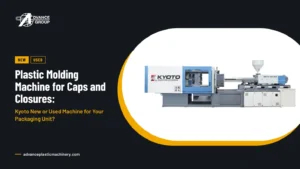
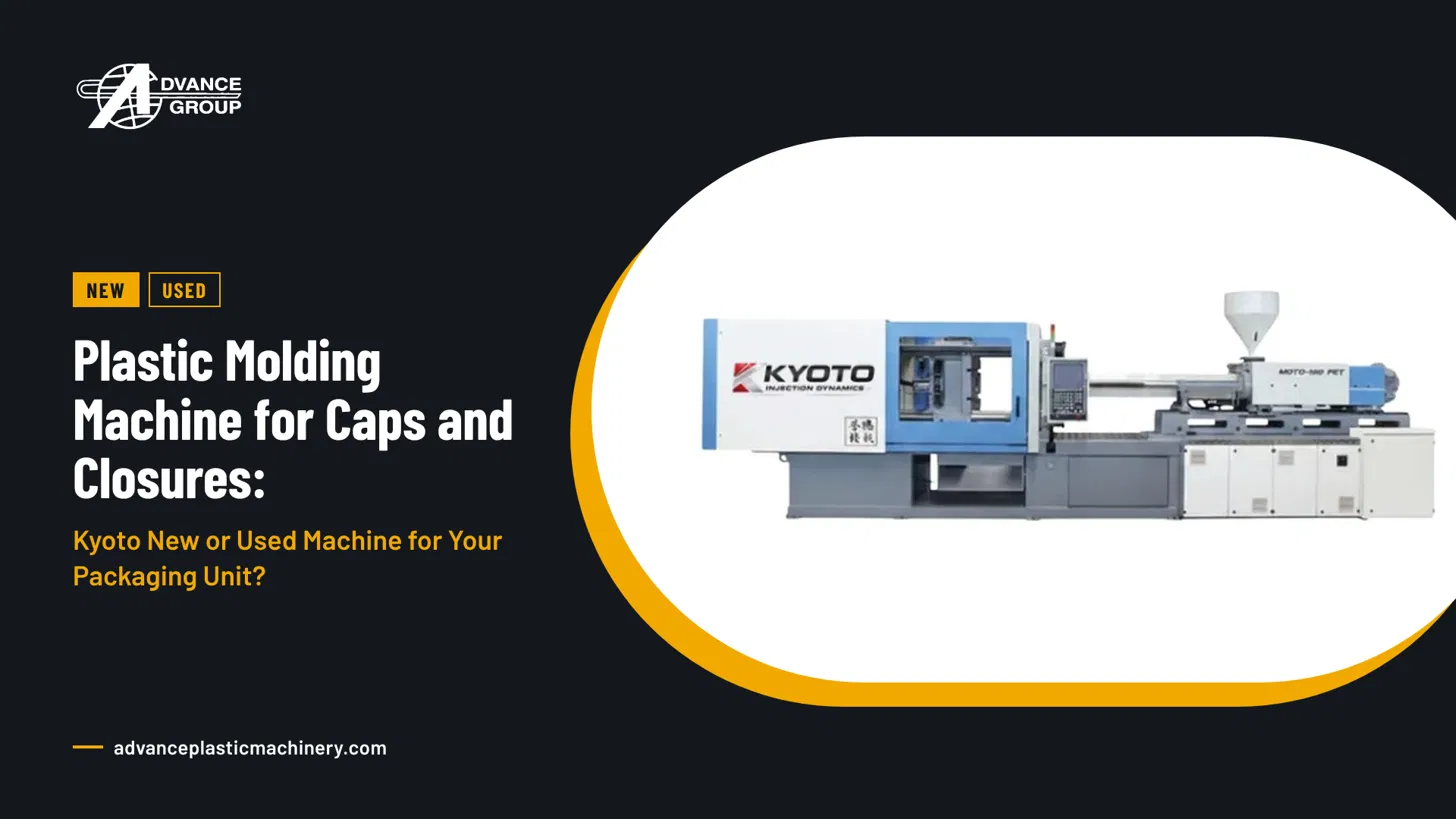
Plastic Molding Machine for Caps and Closures: Kyoto New or Used Machine for  Your Packaging Unit?

Plastic Molding Machine

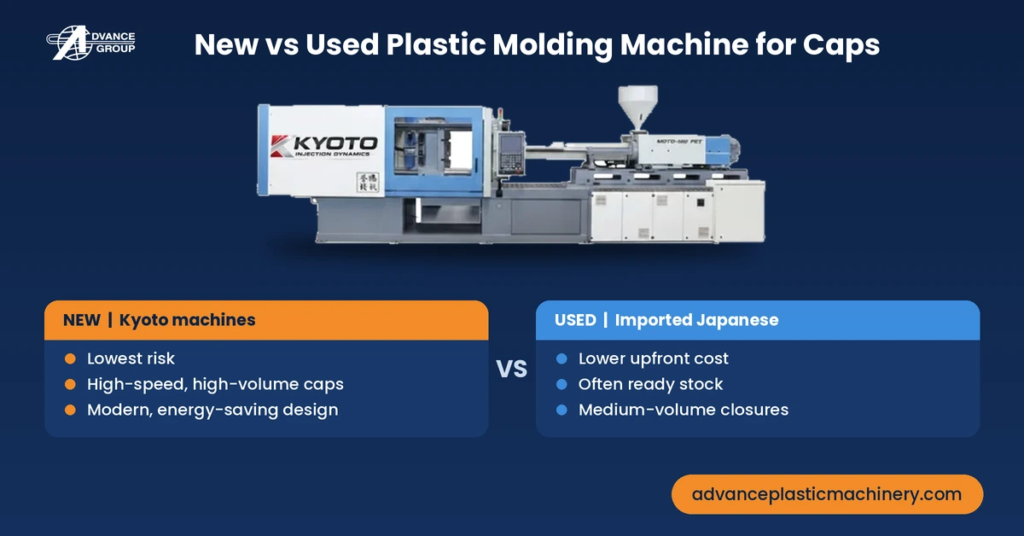
Choose a new Kyoto plastic molding machine if you run high-volume, tight-tolerance cap production for many years. Choose a used one if you want to start lean, add capacity quickly, or run medium-volume closures on a tighter budget. The right plastic molding machine depends on your cap size, your cycle time target, your budget and how soon you need to start.
If you’ve been Googling “new vs used plastic molding machine for cap manufacturing” at midnight, this guide is for you.

plastic molding machine

Which Plastic Molding Machine Is Best for Caps and Closures: New or Used?

Factor

New plastic molding machine (Kyoto AG series)

Used plastic molding machine (imported Japanese)

Upfront cost

Higher

Lower

Best for

High-speed, high-volume thin-wall caps and closures

Medium-volume closures, lids, jar caps, start-ups

Energy use

Modern, energy-saving design

Depends on age; can be improved with a hybrid servo system

Risk 

Lowest

Moderate, and manageable with a proper inspection

Delivery

Depends on model and import schedule

Often ready stock

Spare parts and support

Easy for current models

Easy for popular Japanese brands

plastic molding machine

How Does a Plastic Cap Molding Machine Work?

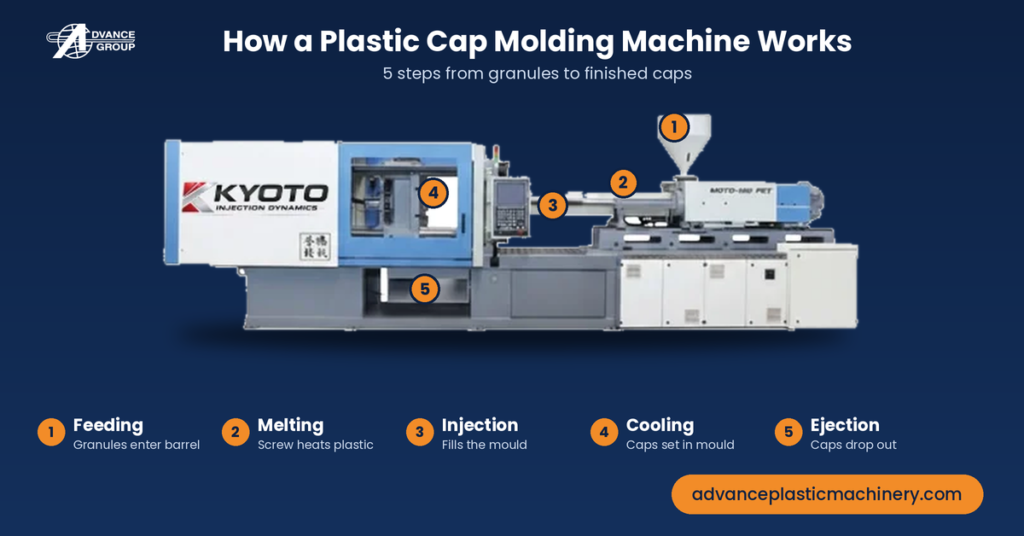
A plastic cap molding machine is an injection molding machine fitted with a cap mould. The process runs in five steps:

  • Feeding: plastic granules (usually HDPE or PP) drop from the hopper into the barrel.
  • Melting: the screw and barrel heat and push the plastic forward.
  • Injection: melted plastic is injected into a multi-cavity mould, often with a hot runner system, so many caps are made in one shot.
  • Cooling: the caps set inside the mould. Cooling time is usually the biggest slice of your cycle.
  • Ejection: the mould opens, the caps drop out, and the cycle repeats.

Many tamper-evident closures also have threads, a tamper band and a liner. The machine has to handle all of that cleanly, shot after shot.

That is why a bottle cap manufacturing machine isn’t judged on tonnage alone. Injection speed, repeatability, clamping force and cooling all matter.

What Size Injection Molding Machine Do I Need for Caps and Closures?

A buyer on a packaging forum might ask: “I have a 24-cavity cap mould. What tonnage should I look at?”

The honest answer is that tonnage depends on three things:

  • Projected area of all cavities: the more cavities, the more clamping force you need.
  • Wall thickness: thin-wall caps need higher injection pressure and speed.
  • Material: PP and HDPE flow differently.

When Should You Buy a New Plastic Molding Machine for Caps?

Pick a new plastic molding machine when:

  • You make high-volume caps where every fraction of a second saved per cycle adds up to lakhs of caps a month.
  • Your customers are FMCG or beverage brands with strict dimensional and quality checks.
  • You want modern energy consumption levels and lower operating costs from day one.
  • You plan to run the machine 24×7 for 8–10 years.
plastic molding machine

When Does a Used Plastic Injection Molding Machine for a Packaging Unit Make Sense?

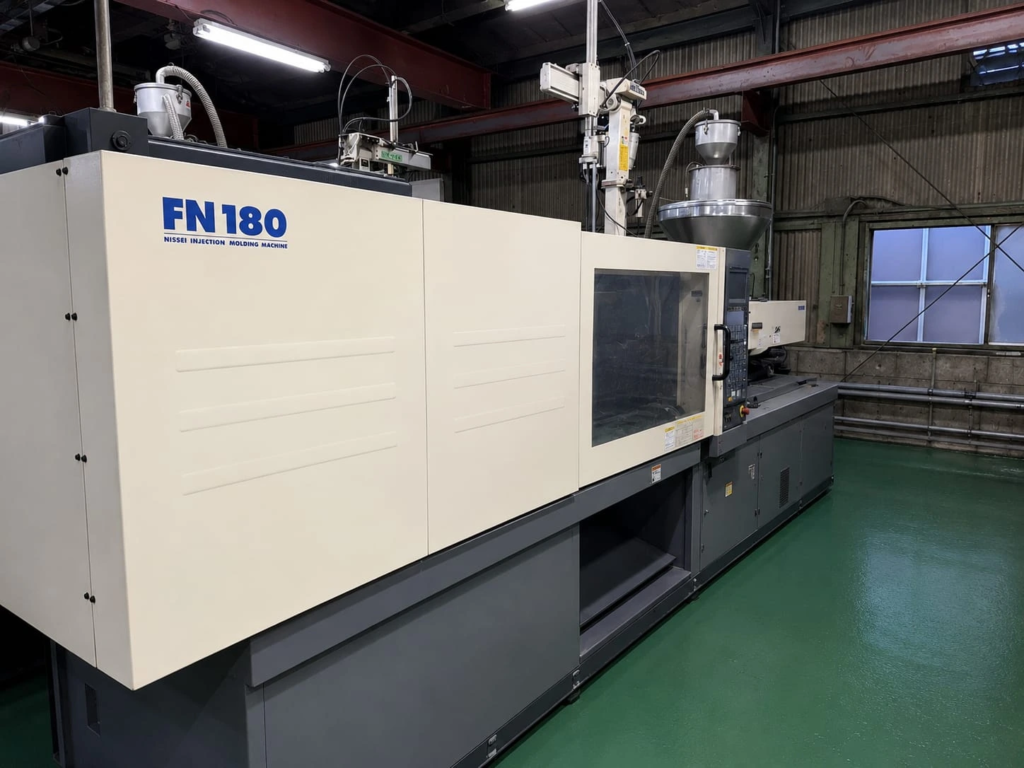
A used plastic injection molding machine for a packaging unit can be the smarter move when:

  • You’re a start-up and want to preserve cash for moulds, raw material and working capital.
  • You need fast capacity addition to meet a new order, and ready stock matters more than a waiting list.
  • Your caps are bigger or simpler, such as jar lids, bucket lids, wide-mouth closures and utility caps, where ultra-high-speed cycles aren’t the priority.
  • You want a backup machine so a breakdown doesn’t stop your whole line.

Where Can You Buy a New or Used Plastic Molding Machine for Caps in India?

Advance Plastic Machinery has supplied plastic machinery in India since 1993 from Greater Noida, Uttar Pradesh. You get both options under one roof:

Because one team handles both new and used machines, you get advice based on your actual cap mould and production plan, not a push toward one option.

Conclusion:

Whether you choose a new Kyoto machine or a used Japanese one, choose based on volume, cap specification, budget, and timeline. Inspect the machine thoroughly, insist on a trial run, and don’t forget the dryer, loader, and temperature control.

Your cap mould is waiting for the right machine. Send your cavity count, material and target cycle time to Advance Plastic Machinery, and we’ll help you match it with a new Kyoto machine or a tested used machine from stock. Call us today and get started.

Frequently Asked Questions

Is a new or used plastic molding machine better for cap manufacturing?

A new machine suits long-term, high-speed, high-volume production. On the other hand, a used machine suits start-ups, quick expansion and medium-volume work. Consider the production volume, budget and quality needs before deciding on the matter. 

The price of a plastic cap molding machine depends on tonnage, brand, age, condition and whether it is new or used. Ask for a written quote with machine specs, trial run and delivery terms.

It depends on cavity count, projected area, wall thickness and material. Share your mould drawing and shot weight with a machinery expert who can size the clamping force properly.

Check the screw and barrel, clamping unit, hydraulics, controller, running hours and a live trial with your mould. Don’t forget to confirm documents and after-sales support.

For cap production, a hopper dryer and auto loader become essential. Dry material, steady feeding and stable mould temperature improve quality and cut rejects.

Share:

Facebook
Twitter
LinkedIn
WhatsApp

Popular Posts