
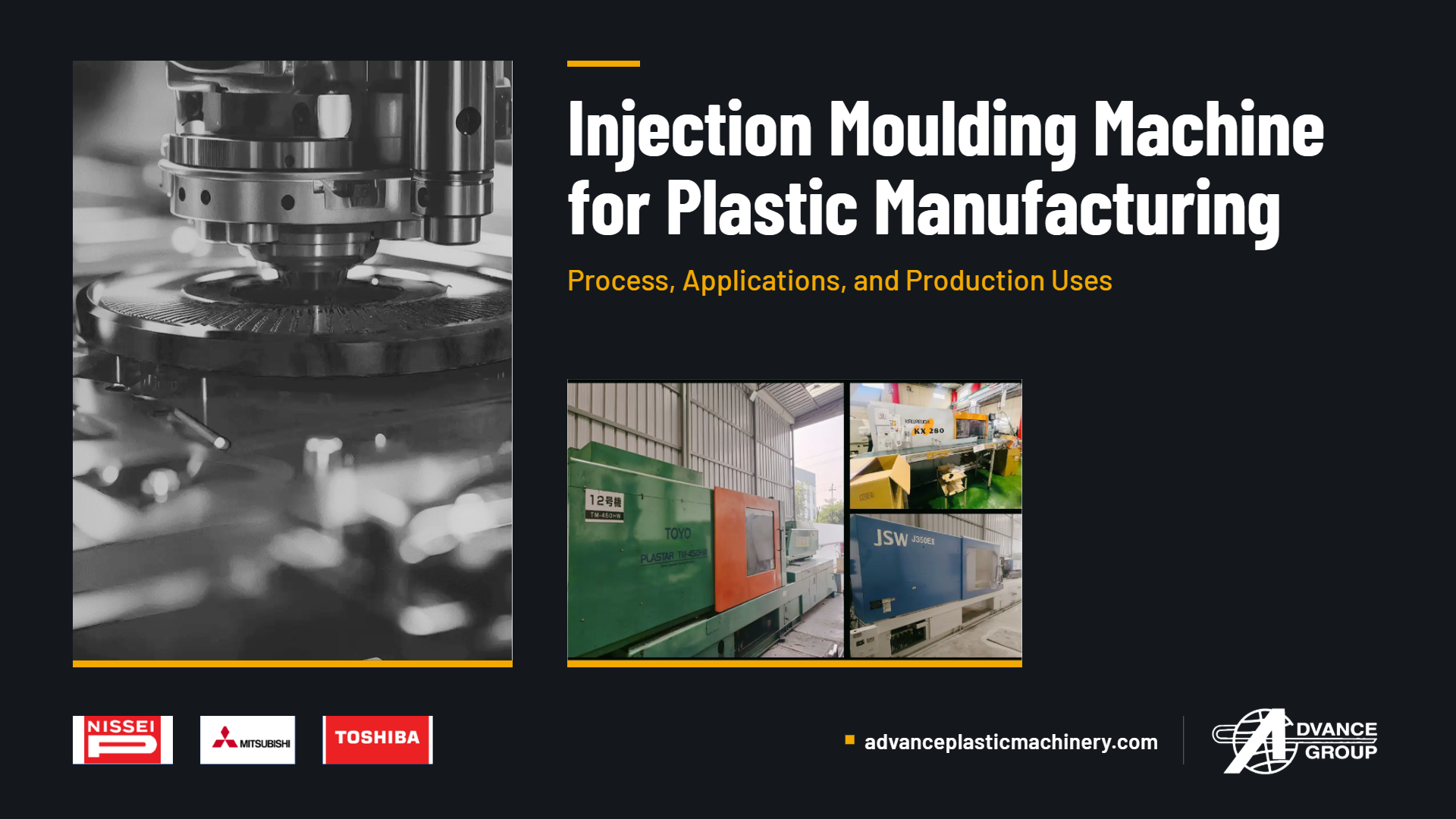
Injection Moulding Machine for Plastic Manufacturing: Process, Applications, and Production Uses

Injection Moulding Machine

An injection moulding machine melts plastic granules, injects the melt into a closed steel mould  under pressure, and ejects a finished part once it cools. Nearly every plastic product, from bottle caps  to car dashboards, is made this way. For a manufacturer, the choice of injection molding equipment decides part quality, cycle time, and cost per piece. This guide from Advance Plastic Machinery covers the process, machine types, applications, and how to match tonnage to your production. 
How an Injection Moulding Machine Works

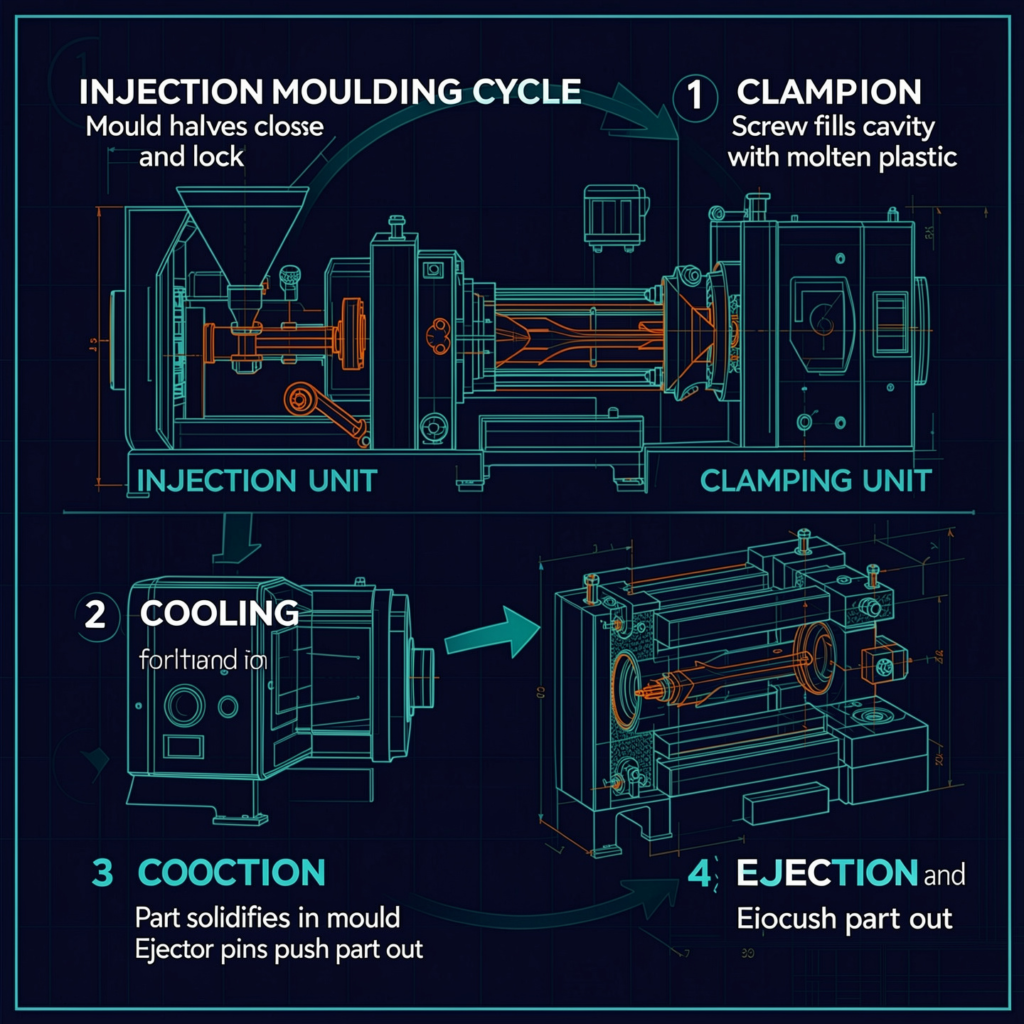
An injection moulding machine has two halves: an injection unit that melts and pushes the plastic and a clamping unit that holds the mould shut against injection pressure. The plastic injection  moulding cycle repeats the same four stages for every shot, which is why an injection molding  equipment turns out thousands of identical parts with very little variation.

  1. Clamping: the two mould halves close and lock under the rated tonnage. 
  2. Injection: the screw moves forward and fills the cavity with molten plastic. 
  3. Cooling: the part solidifies in the mould while the screw prepares the next shot.
  4. Ejection: the mold opens, and ejector pins push the finished part out.
injection moulding

Key Parts of an Injection Moulding Machine

Every injection molding equipment is built around a hopper, a heated barrel with a reciprocating  screw, two platens, tie bars and a controller. Clamping force, measured in tonnes, is the headline  specification of any plastic injection  molding equipment, because it sets the largest part area the  mould can hold shut. Shot weight and tie-bar spacing come next when you compare one injection moulding with another newer version,  since they decide how heavy a part you can mould and how big a mould will fit. 

Types of Injection Moulding Machines: Hydraulic, Electric, and Hybrid 

A molding machine is classed by how it is driven. Hydraulic machines give high clamping  force at a lower purchase price, so they suit large parts. All-electric machines use servo motors, which make them quieter, more precise, and cheaper to run for small precision parts.  

The injection moulding machine pairs a hydraulic clamp with an electric screw drive to balance force and energy use.

Applications of an Injection Moulding Machine Across Industries

Because one injection-molding machine can run many moulds and materials, the same injection-moulding equipment serves very different sectors. A single molding machine on the shop  floor may produce PP caps this month and ABS housings the next, with only a mould and material change in between. 

Industry 

Typical moulded parts

Automotive 

Bumpers, dashboards, door trims, and lamp housings.

Packaging 

Caps, closures, thin-wall containers, and crates.

Household 

Chairs, buckets, storage bins, and kitchenware.

Electrical and electronics 

Switch plates, casings, and connectors.

Medical 

Syringes, vials, and device housings.

Production Uses: Matching Injection Moulding Machine Tonnage to Output 

Production planning starts with tonnage. A small injection molding equipment suits light parts that  cycle quickly, while a large injection moulding machine handles big, heavy mouldings with long flow  paths. A plastic moulding machine that is too small gives flash and short shots; one that is too large  wastes power and floor space. For a quick estimate, multiply the projected area of the part in square  inches by 2 to 5 tonnes, depending on the material, and add a 10 to 20 percent margin. As a rough  guide, machines under 150 tonnes cover caps and small components, 150 to 450 tonnes cover housings and crates, and anything above that is for furniture and automotive panels.

Featured Injection Moulding Machine Models in Stock

Each plastic molding machine below is listed with its key specifications and what they mean for  output. Pick the plastic injection molding equipment that fits your part and use the Buy Now link under it.

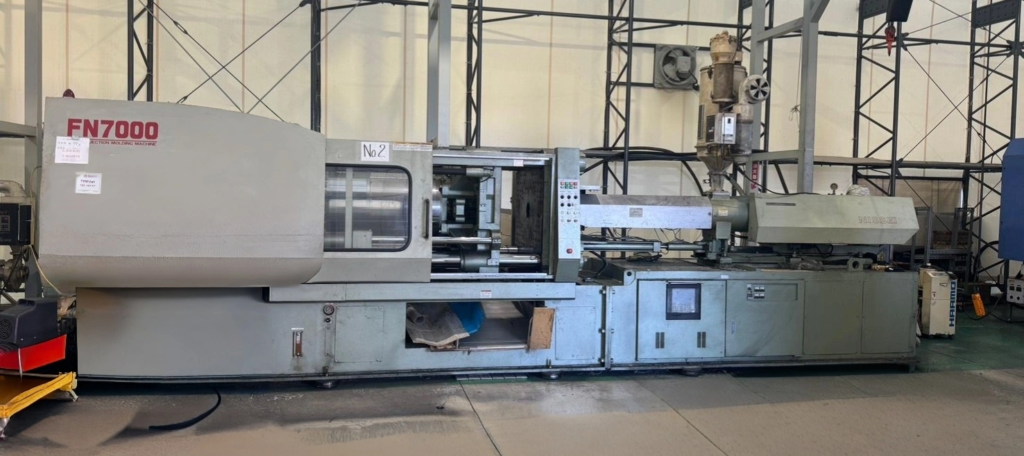
Nissei FN 7000 – 360 Tonnes

Specifications: 360-tonne hydraulic clamp. This model is typically fitted with an 80 mm screw, a shot weight of about 1,200 g, and roughly 735 x 735 mm between tie bars. 

Efficiency and capacity: The hydraulic clamp spreads force evenly over the platen, which limits flash  on wide parts and keeps rejects low. It suits crates, appliance housings, and automotive trims in  medium to high volumes. 

plastic injection moulding

Fomtec 85 Tonne

Specifications: 85-tonne clamping force (about 830 kN) in a compact frame that needs little floor  space. 

Efficiency and capacity: Short strokes and small shots mean quick cycles and low power use per  part. Run it with multi-cavity moulds for caps, closures, and electrical components in large daily quantities.

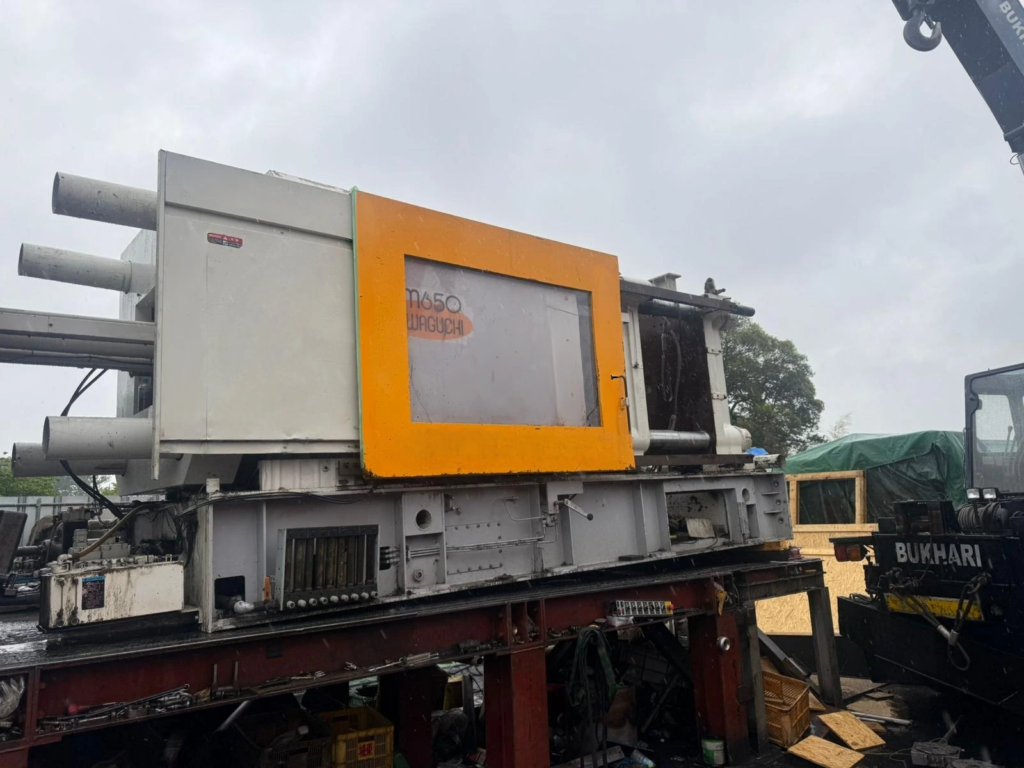
Kawaguchi 650 Tonne B2

Specifications: 650-tonne clamping force. The B2 series uses a fast-acting toggle clamp with automatic  tonnage setting, closed-loop hydraulics, and a six-stage injection profile. 

Efficiency and capacity: Closed-loop control keeps every shot consistent, and staged injection fills  long flow paths without sink marks. It is built for bumpers, chairs, and storage bins, where one large  part comes out per cycle.

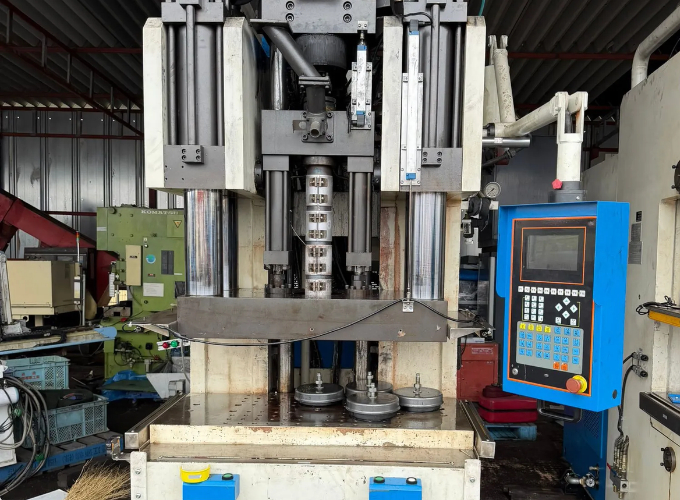
Featured Stock Machine

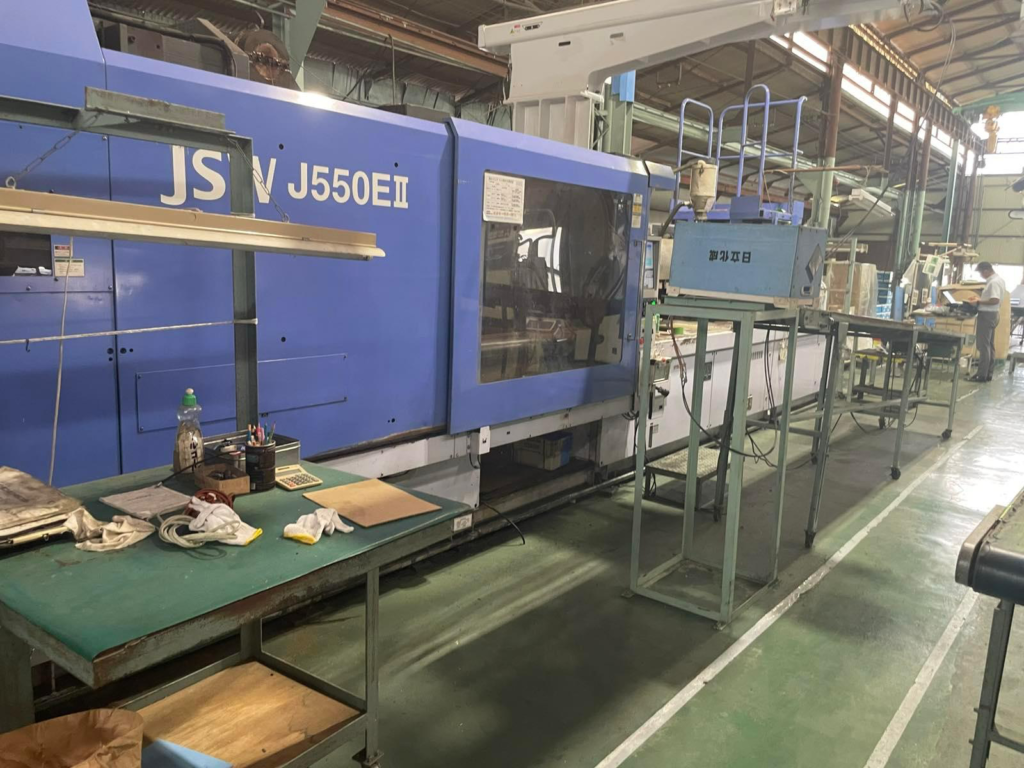
Specifications: Tonnage, screw size, and shot weight are listed on the product page.

Efficiency and capacity: Compare those figures with your mould size and part weight before ordering.

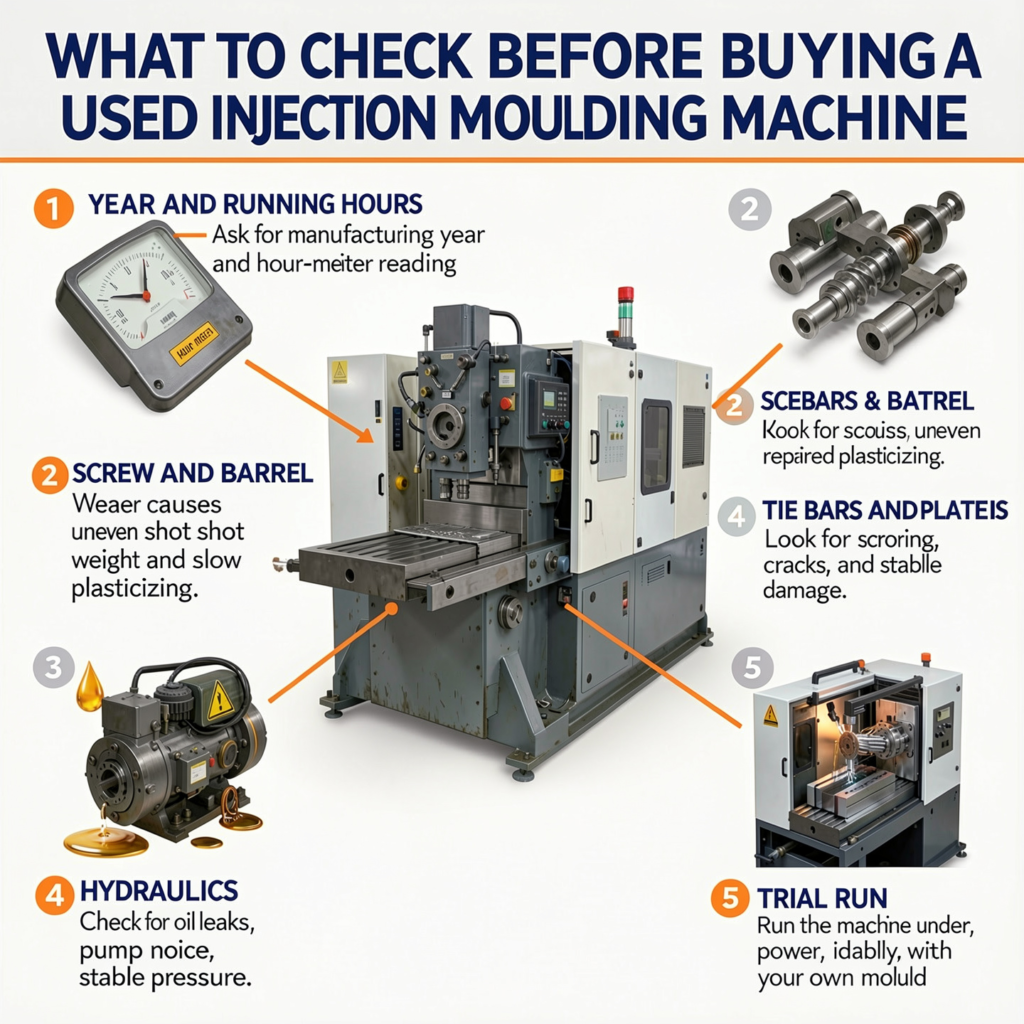
What to Check Before Buying a Used Injection Moulding Machine:

Injection Moulding Machine

A used injection moulding machine costs far less than a new one, but its condition decides whether  it pays back. Check these five points on any used plastic injection molding before you order. 

  1. Year and running hours: ask for the manufacturing year and the hour-meter reading. 
  2. Screw and barrel: wear here causes uneven shot weight and slow plasticizing. 
  3. Tie bars and platens: look for scoring, cracks, or repaired damage. 
  4. Hydraulics: Check for oil leaks, pump noise, and stable pressure. 
  5. Trial run: see the machine running under power, ideally with your own mould.

Why Buy Your Injection Moulding Machine from Advance Plastic Machinery

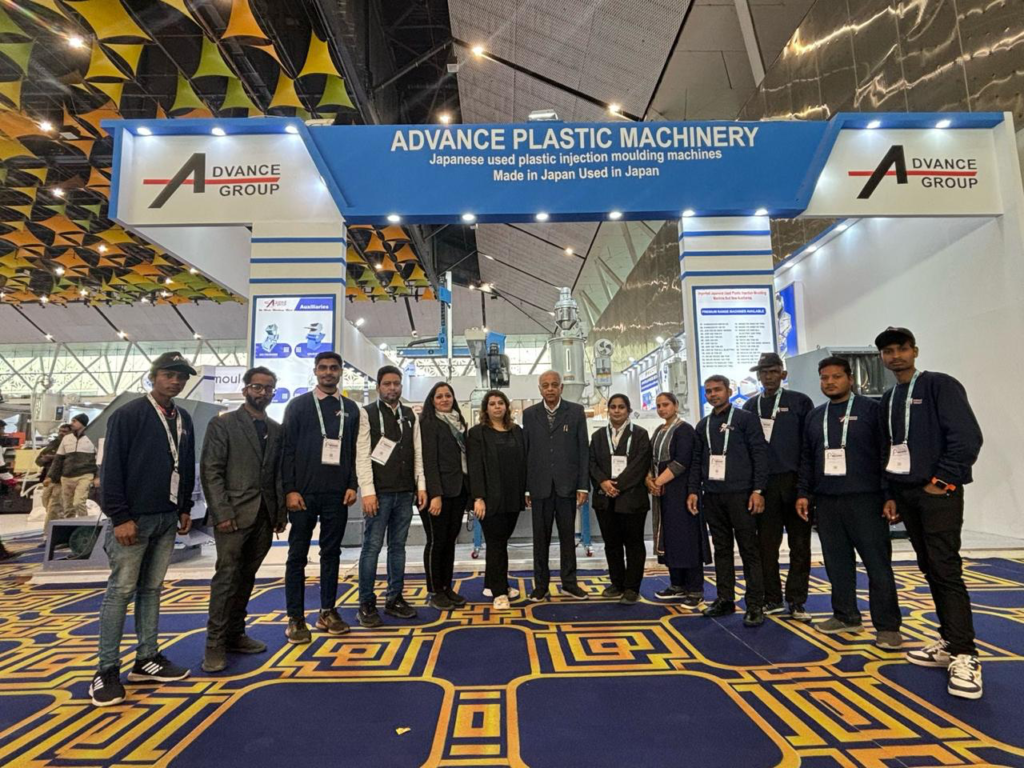
Advance Plastic Machinery supplies used injection moulding equipment from trusted brands such as  Nissei, Kawaguchi, and Fomtec, so you can find a molding machine for almost any  tonnage range. Whether you need a compact plastic moulding machine for a new unit or a high-tonnage plastic molding machine to add capacity, our team helps you match the right  injection moulding machine to your mould, material, and budget. 

Conclusion:

The right injection moulding machine is the one whose tonnage, shot weight, and tie-bar spacing  match your mould and your daily output target. Get that match right, and you gain faster cycles,  fewer rejects, and a lower cost per part. Compare the models above, then order your injection  moulding machine from Advance Plastic Machinery. 

Frequently Asked Questions

What is an injection moulding machine used for?

It is used to mass-produce identical plastic parts such as caps, containers, housings and automotive  components.

Multiply the projected area of the part by 2 to 5 tonnes per square inch and add a 10 to 20 per cent  margin. 

Common thermoplastics such as PP, HDPE, ABS, nylon, and polycarbonate. 

Yes, if the screw, barrel, tie bars, and hydraulics are in good condition and it has been tested under  power. 

You can order directly from the product pages at advanceplasticmachinery.com.

Share:

Facebook
Twitter
LinkedIn
WhatsApp

Popular Posts