
Plastic Dana Mixing in Plastic Manufacturing: Process, Material Preparation and Equipment

plastic dana

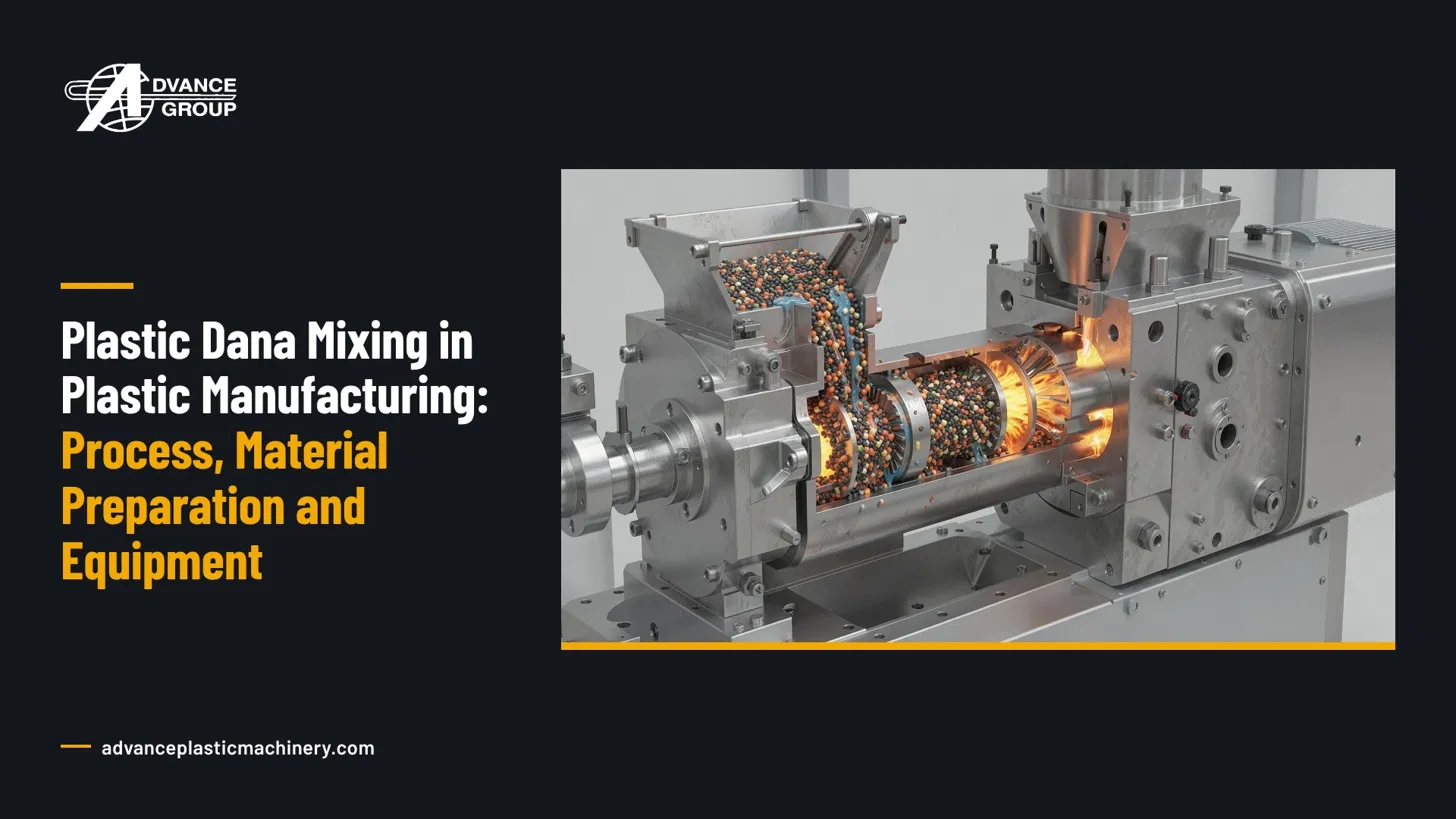
Plastic dana mixing is the step where plastic granules (dana) are blended with colour masterbatch, regrind and additives before moulding, so every part comes out with the same colour and quality.

Skipping this step, or doing it badly, leads to streaks, patchy colour and rejected parts. This guide covers the process, how to prepare the material, and which mixing equipment to use.

What Is Plastic Dana Mixing and Why Does It Matter in Plastic Manufacturing?

Plastic dana is the raw material of injection moulding. It is the small plastic pellets or granules that melt inside the machine barrel. Plastic dana mixing means blending these pellets with other ingredients before they enter the machine.

Moulders usually mix:

  • Virgin resin (fresh granules)
  • Colour masterbatch (a concentrated colour or additive in a carrier resin)
  • Regrind (scrap and runners that have been crushed and reused)
  • Additives such as UV stabilisers, fillers or anti-static agents


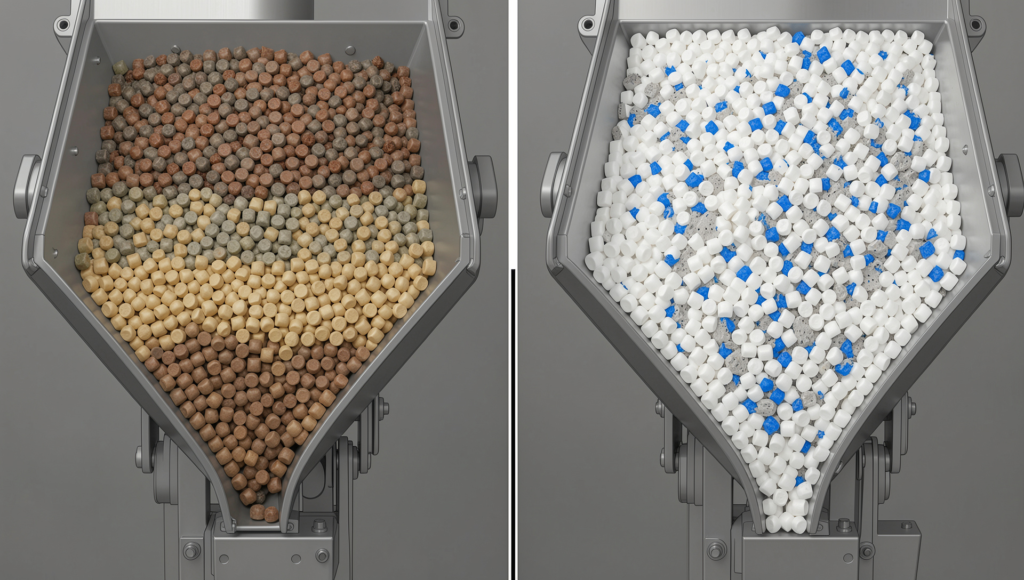
The screw does some mixing too, but it cannot fix a poor blend. Granules of different sizes and weights separate in the hopper, and the result is uneven colour dispersion. A proper pre-mixing step keeps the blend uniform from the first shot to the last.

plastic dana

How Do You Prepare Plastic Dana Before Mixing?

Good mixing starts with good preparation. Four checks matter most:

Dry the dana. Moisture-sensitive plastics like ABS, PET and nylon must be dried in a hopper dryer first. Wet granules cause bubbles, silver streaks and weak parts.

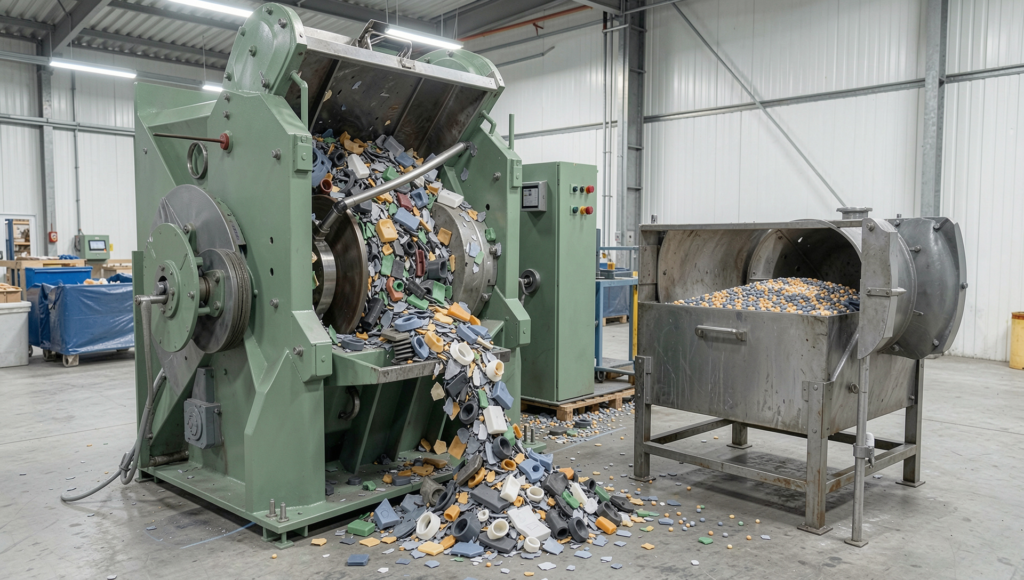
Grind regrind to a similar size. Use a grinder or crusher. Regrind that is much bigger or finer than virgin dana will separate during mixing.

Remove dust and fines. Fine powder from grinding clogs feeders and spoils colour.

Keep materials clean and labelled. Mixed-up grades or dirty regrind are among the most common causes of rejections.

How Is Plastic Dana Mixed Step by Step?

  1. Weigh each material by batch. Do not guess by scoops.
  2. Load the base dana first, then regrind, then masterbatch on top.
  3. Close the lid and engage the safety interlock on the mixer.
  4. Set the mixing timer. Run the paddle or ribbon until the colour looks even.
  5. Take a sample from the middle and the bottom of the batch to check consistency.
  6. Move the blend to the machine hopper quickly, using an auto loader or covered bins. Long waiting time allows separation again.


Practical tip:
Mix only what you will use within the shift. A blend left standing for hours in a drum can separate and settle.

Plastic Toys Manufacturer

How Much Masterbatch and Regrind Should You Add to Plastic Dana?

There is no single number. It depends on the resin, the colour depth and the product.

As a general guide:

  • Masterbatch: The supplier’s datasheet gives the recommended ratio. It is usually a small percentage of the total batch.
  • Regrind: Many moulders reuse some regrind, but the share depends on part quality needs. Food-contact and high-precision parts often allow less.
  • Coloured regrind: It already carries colour, so it usually needs less fresh masterbatch.


Start with the supplier’s ratio, run a trial batch and adjust in small steps. This is much safer than changing several things at once.

plastic dana

How Long Should Plastic Dana Be Mixed?

Long enough for an even blend, and no longer. Over-mixing wastes power and can create static or dust. Under-mixing leaves streaks.

Most batches need only a few minutes. The best way to find your number is a trial run: mix, sample and inspect the colour at different times, then fix that time as your standard.

Which Equipment Is Used for Plastic Dana Mixing?

Equipment

Best for

Note

Paddle/ribbon mixer

Batch mixing of dana, masterbatch and regrind

Common in small and mid-size units 

Hopper-mounted blender

Mixing right at the machine throat

Saves handling but limited batch size

Grinder/crusher

Reusing scrap as regrind

Keeps particle size consistent

Drum tumbler 

Simple, low-volume mixing 

Cheaper, slower, less uniform

Gravimetric blender 

Exact dosing by weight

Used where accuracy is critical

Hopper dryer

Removing moisture before mixing

Essential for hygroscopic resins 

Auto loader 

Moving the mix to the machine

Reduces separation and spills 

Where Can You Buy a Plastic Dana Mixer in India?

Advance Plastic Machinery has supplied plastic processing machinery from Noida, Uttar Pradesh since 1993. It stocks 170+ injection moulding machines and a full range of auxiliaries, including hopper dryers, grinders, auto loaders, mould temperature controllers and plastic dana mixers in 50 kg, 100 kg and 150 kg capacities.

Conclusion

Plastic dana mixing is a small step with a big effect on product quality, colour consistency and material cost. Dry your dana, match the regrind size, weigh every batch, mix for the right time and use a mixer that suits your volume. Do this consistently, and rejections drop.

Ready to fix uneven colour in your moulded parts? Reserve your plastic dana mixer by paying only 10%. Send an enquiry today.

Frequently Asked Questions

What is plastic dana mixing used for?

It blends virgin granules with masterbatch, regrind, and additives so the final product has even colour and consistent properties.

Plastic dana is the base granule, whereas masterbatch is a concentrated mix of colour or additives in a carrier resin, added in small amounts to the dana.

It usually takes a few minutes. Run a trial, sample the blend and fix the time that gives even colour.

Yes, for moisture-absorbing plastics like ABS, PET and nylon. Wet dana causes bubbles, streaks and weak parts.

A paddle or ribbon dana mixer is widely used. Drum tumblers, hopper blenders and gravimetric blenders are also used. However, batch size and accuracy are considered.

Share:

Facebook
Twitter
LinkedIn
WhatsApp

Popular Posts