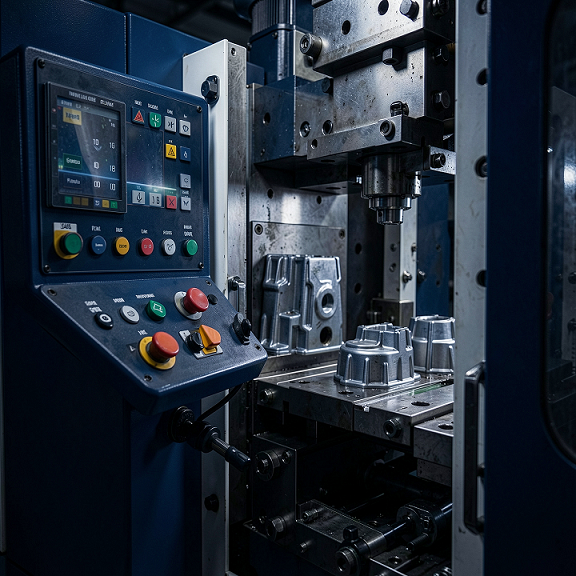
A vertical plastic injection machine is an injection moulding machine whose clamping unit opens and closes up and down, so the mould sits flat and horizontal while molten plastic is injected into it. This layout suits insert moulding, overmoulding and small precision parts. It also needs far less floor space than a horizontal machine.
What is a Vertical Plastic Injection Machine?
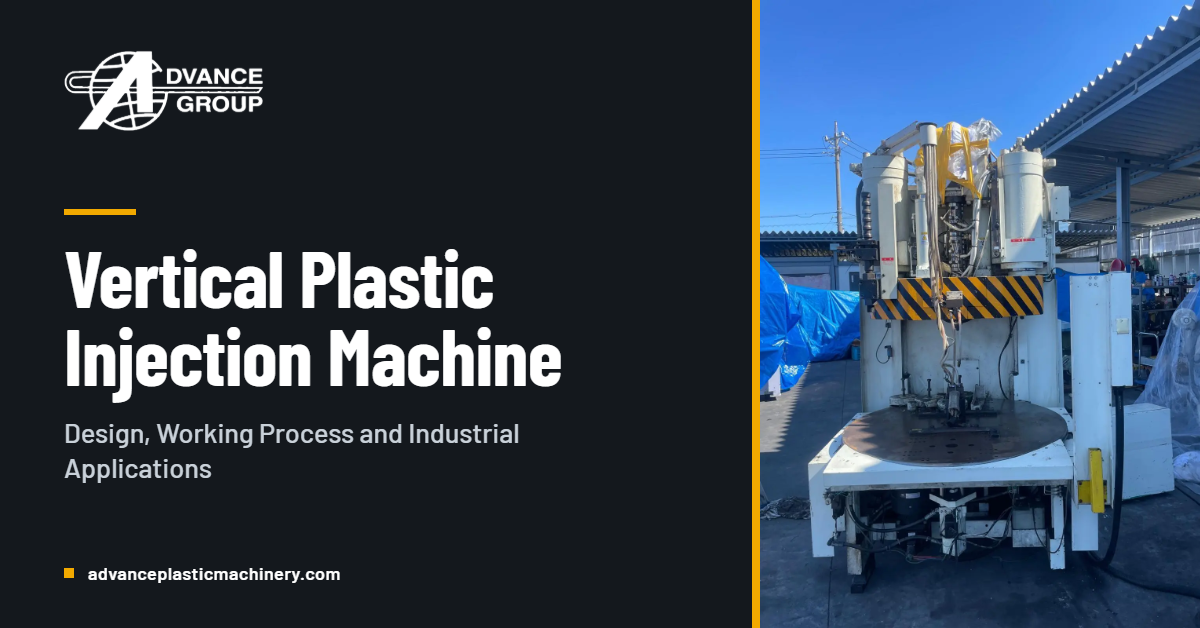
A vertical plastic injection machine, also called a vertical injection moulding machine, melts thermoplastic granules and injects them into a closed mould. The mould halves close vertically, with the lower half fixed on a table and the upper half pressing down.
Since operators work at a comfortable height and can see the open mould cavity directly. This makes it easy to place inserts, terminals or pre-formed components before each shot.
How is a Vertical Plastic Injection Machine Designed?
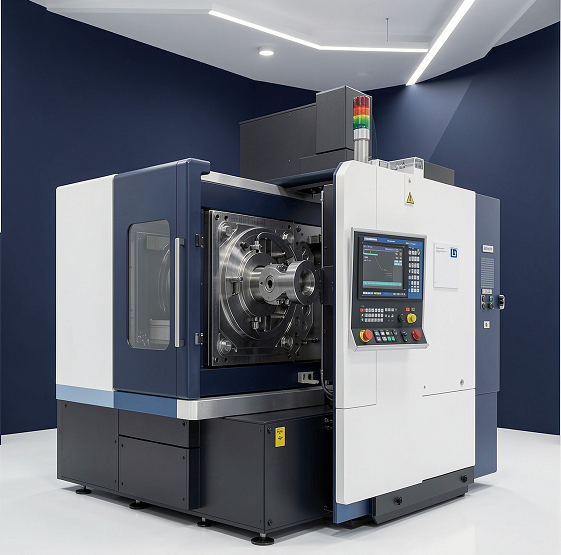
The design is built around a few core assemblies:
Clamping unit: holds the mould shut against injection pressure. It uses a hydraulic cylinder, a toggle mechanism or a servo-driven system. The clamping force is rated in tons.
Injection unit: a heated barrel with a reciprocating screw that melts, mixes and injects the plastic. It can be mounted vertically over the mould or horizontally to inject through the parting line.
Mould and platens: the fixed platen carries the lower mould half and the moving platen carries the upper half.
Worktable: may be a single fixed table, a shuttle table that slides in and out, or a rotary table with two to four stations.
Control system: a PLC or microprocessor controller that manages temperature, injection pressure, holding pressure, speed and cycle time.
Machine frame and safety guards: a rigid column or C-frame design with light curtains or door interlocks.
How Does a Vertical Plastic Injection Machine Work?
- Loading: The operator adds the plastic pellets or granules into the hopper, which is located at the top of the machine.
- Heating & melting: In the heated barrel, the pellets move and become liquid.
- Clamping: The machine closes and holds the metal tightly.
- Injection: The molten material is pushed into the cavity at controlled speed and pressure.
- Cooling: The plastic cools and takes the exact shape of the mould.
- Opening and ejection: The mould opens, and the newly formed plastic component comes out.
How is a Vertical Plastic Injection Machine Different from a Horizontal One
Feature | Vertical machine | Horizontal machine |
Clamp direction | Up and down | Left to right |
Insert loading | Small footprint | Larger footprint |
Floor space | Easy, gravity-assisted | Harder; inserts may fall |
Typical tonnage | Low to medium | Low to very high |
Ceiling height | Higher requirement | Lower requirement |
Part ejection | Manual or robotic pick | Parts drop automatically |
Best for | Inserts, overmoulding, small parts | High-volume, large parts |
What is Insert Moulding and Why Do Vertical Machines Suit It?
Insert moulding places a pre-made component, such as a metal pin, terminal, bush or electronic part, into the mould before plastic is injected around it. Overmoulding moulds a second material over an existing part.
Vertical machines suit both because the mould opens upward and operators or automation systems place the inserts directly into the cavity. Gravity keeps them in position, which reduces scrap and improves repeatability.
What Types of Vertical Injection Moulding Machines Are Available?
By drive system
Hydraulic: strong clamping force, widely used and cost-effective
Servo-hydraulic or hybrid: better energy efficiency and repeatability
Fully electric: high precision and cleanliness, often used in medical and electronics work
By table configuration
Single-station: simple and economical
Shuttle table: one mould loads while the other moulds
Rotary table (2, 3 or 4 stations): continuous cycling for higher output
Where Can You Buy Vertical Plastic Injection Machines in India?
If you’re comparing suppliers, look for one that can advise on tonnage, shot size and mould compatibility before you buy. Advance Plastic Machinery supplies plastic injection moulding machinery for manufacturers and can help you shortlist a machine for your application. With 21+ years in the business, we deliver quality and excellence across our products. Prompt delivery and quality after-sales services have made us one of the top plastic processing suppliers in India.
Conclusion:
A vertical plastic injection machine is the right choice when your product involves inserts, overmoulding or small precision parts, or when floor space is tight. Its main strengths are gravity-assisted insert placement, ergonomic loading and flexible multi-station tables.
Before buying, check your required clamping force, shot size and ceiling height. Then compare suppliers on technical support as well as price. Call us today for further enquiry.
Frequently Asked Questions
What is a vertical plastic injection machine used for?
A vertical plastic injection machine is used for insert moulding, overmoulding and small precision parts, including electrical connectors, automotive sensors and medical components.
Is a vertical injection machine better for insert moulding?
The mould remains flat, and the inserts sit in the cavity under gravity during injection. This improves precision and reduces rejects.
What is the tonnage range of vertical injection machines?
The tonnage range of vertical injection machines usually spans from 15 tons to 450 + tons, depending on machine type and manufacturers.
How much space does a vertical injection moulding machine need?
A vertical injection moulding machine needs roughly 40 to 60% less area than a horizontal machine of similar size and clamping capacity.
How to choose a vertical plastic injection machine?
When you buy a vertical plastic injection machine, match clamping force, shot size, platen size and table type to your part and volume. Then confirm the supplier’s offers and installation.