A plastic toys manufacturer needs an injection moulding machine with the right clamping force, shot size, precise temperature and pressure control, and a well-cooled mould to turn ABS, polypropylene and polystyrene granules into safe, consistent toys at scale.
Most toys you see on a shelf, from building blocks to toy cars to dolls, started as plastic granules in a hopper. This guide covers how the machine works, which components matter, how to size it and how to avoid defects.
What Does a Plastic Toys Manufacturer Need in an Injection Moulding Machine?
A plastic toys manufacturer needs five things from a machine: enough tonnage to hold the mould shut, a screw and barrel matched to the plastic, repeatable cycle control, a mould with good cooling channels, and reliable auxiliary equipment.
Toys are different from industrial parts in three ways:
- High volumes. Many toys are small, with high-cavity moulds, so saving a few seconds per cycle adds up to thousands of extra pieces per shift.
- Tight fits. Interlocking bricks, snap-fit joints, and moving parts require tight dimensional tolerances.
- Visible quality. Parents and retailers notice flash, sink marks and colour streaks immediately.
How Are Plastic Toys Made Using Injection Moulding, Step by Step?
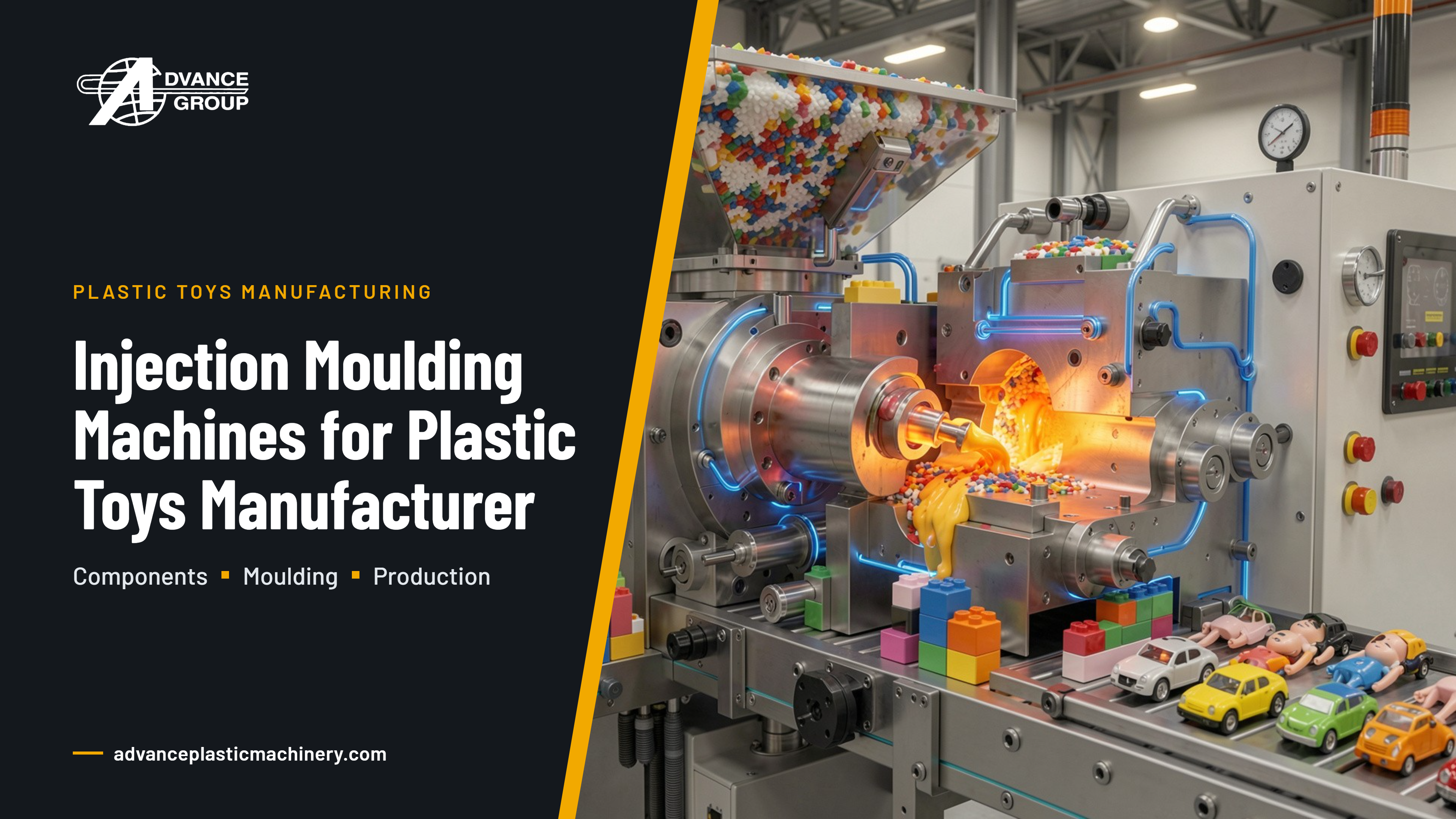
- Material preparation. Granules are dried in a hopper dryer. Masterbatch is mixed in for colour.
- Loading. An auto loader feeds the machine hopper.
- Plasticising. The rotating screw melts the plastic inside the heated barrel.
- Injection. The screw pushes the molten polymer through the nozzle and runners into the mould cavity.
- Packing and cooling. Holding pressure compensates for shrinkage while cooling channels solidify the part.
- Ejection. The mould opens, and ejector pins release the toy.
- Finishing. Operators trim gates, inspect parts, and send rejects to a grinder for regrind.
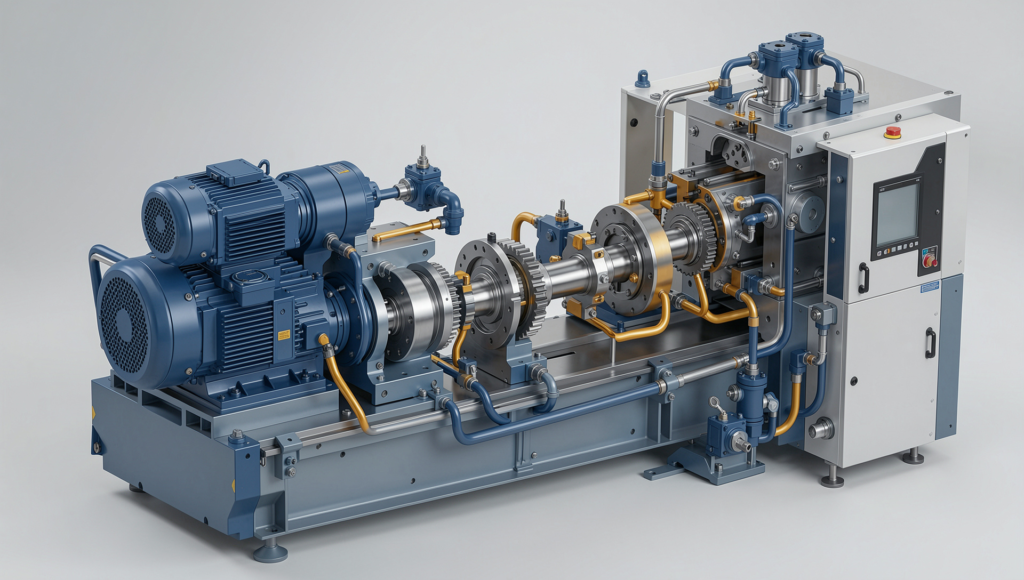
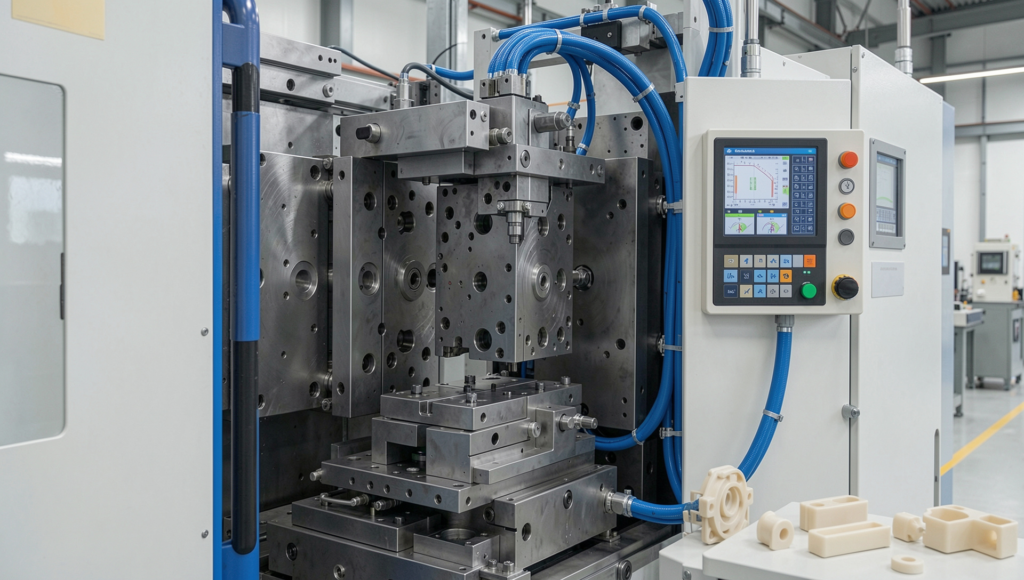
An injection moulding machine has four core systems: the injection unit, the clamping unit, the drive system and the control system. The table shows what each does for toy production.
Component | What it does | Why it matters for toys |
Hopper | Holds and feeds granules | Dry, clean feed prevents splay and bubbles |
Screw and barrel | Melts and homogenises plastic | Even melt gives uniform colour and strength |
Clamping unit (platens, tie bars) | Holds the mould closed under pressure | Insufficient force causes flash |
Mould (cavity and core) | Shapes the toy | Cavity count decides output per cycle |
Nozzle | Delivers melt into the mould | Prevents drooling and stringing |
Hydraulic or servo drive | Powers movement | Servo systems cut energy use and improve repeatability |
PLC/controller | Stores and controls process settings | Repeat settings mean consistent batches |
Which Plastic Is Best for Making Toys?
Material | Typical toy use | Key property |
ABS | Building bricks, action figures, toy cars | Strong, glossy, holds fine detail |
HDPE | Buckets, ride-ons, outdoor playsets | Impact-resistant, weatherproof |
Polypropylene (PP) | Containers, flexible parts, small toys | Tough, fatigue-resistant, lightweight |
Polystyrene (PS) | Rigid, low-cost accessories | Easy to mould, but brittle |
TPE / soft PVC | Squeezable, soft or rubbery toys | Flexible and soft-touch |
What Toy Safety Standards Must a Plastic Toys Manufacturer Follow?
A plastic toys manufacturer in India must comply with BIS standard IS 9873 under the Toys (Quality Control) Order, which requires the ISI mark on toys sold in the country. For export markets, buyers typically ask for EN 71 (Europe) or ASTM F963 (USA).
These standards generally cover:
- Mechanical safety: no sharp edges, small detachable parts or choking hazards
- Flammability limits
- Chemical safety: restricted heavy metals and phthalates
Suggestion: Standards are updated periodically, so check the current BIS notification before you finalise your product range.
Where Can a Plastic Toys Manufacturer Source Injection Moulding Machines in India?
If you are setting up or expanding a toy unit, Advance Plastic Machinery is a practical place to start. Based in Greater Noida, the company supplies imported Japanese used injection moulding machines from brands such as Mitsubishi, Toshiba, JSW, Sumitomo, Niigata and Nissei, along with new machines and auxiliaries.
Conclusion
A successful plastic toys manufacturer makes three key decisions: the right machine size for the mould, the right material for the toy, and a stable process supported by good auxiliaries and clean regrind practices.
Ready to scale your plastic toys production? Explore our injection moulding machines and request a quote today.
Frequently Asked Questions
Which injection moulding machine is best for making plastic toys?
When you look for the best injection moulding machine for plastic toys, ensure that it matches your mould size, material and output target. Focus on stable control, a suitable screw, and a servo or hybrid drive if energy cost matters.
How are plastic toys made step by step?
First, granules are dried, melted in the barrel, injected into a steel mould, cooled and ejected. Gates are then trimmed and parts inspected. Rejects and runners can be ground and partly reused as regrind.
How much tonnage does one need for plastic toys?
Tonnage requirements depend on the toy’s projected area and the plastic. Small toys may need roughly 50 to 150 T, while large outdoor toys need 400 T or more.
Is a used injection moulding machine good for plastic toy manufacturing?
A plastic toy manufacturer can include used machines and cut investment. These are easily available and come with quick delivery. Don’t forget to check screw and barrel wear, tie bars, hydraulics and controls, and ask for a trial run with your mould.
What is the difference between a hydraulic and a servo injection moulding machine?
Hydraulic machines use a constant-running pump. A servo injection moulding machine uses motors that draw power mainly when moving, which cuts energy consumption and improves repeatability. This makes the servo suitable for high-volume toy production.