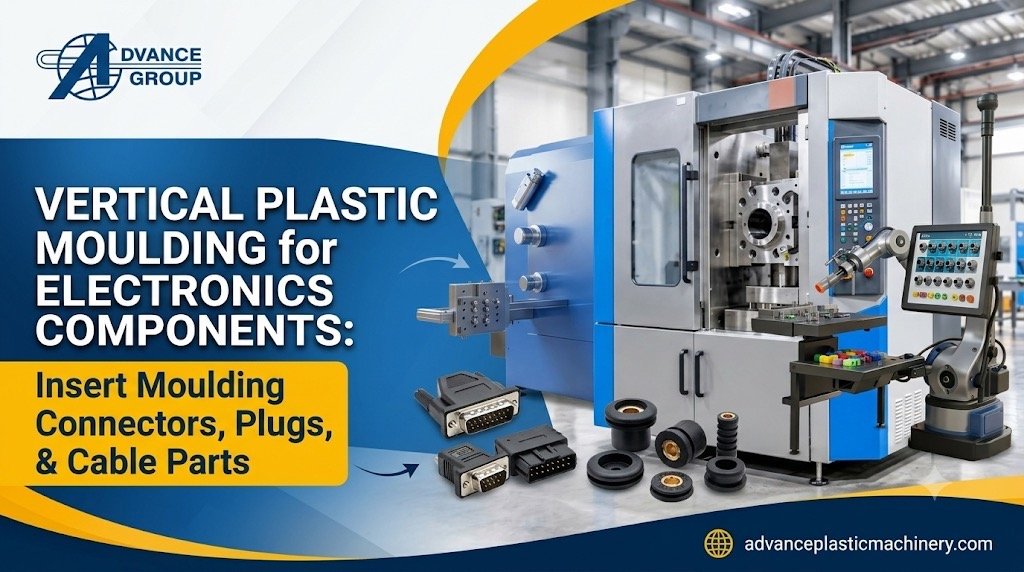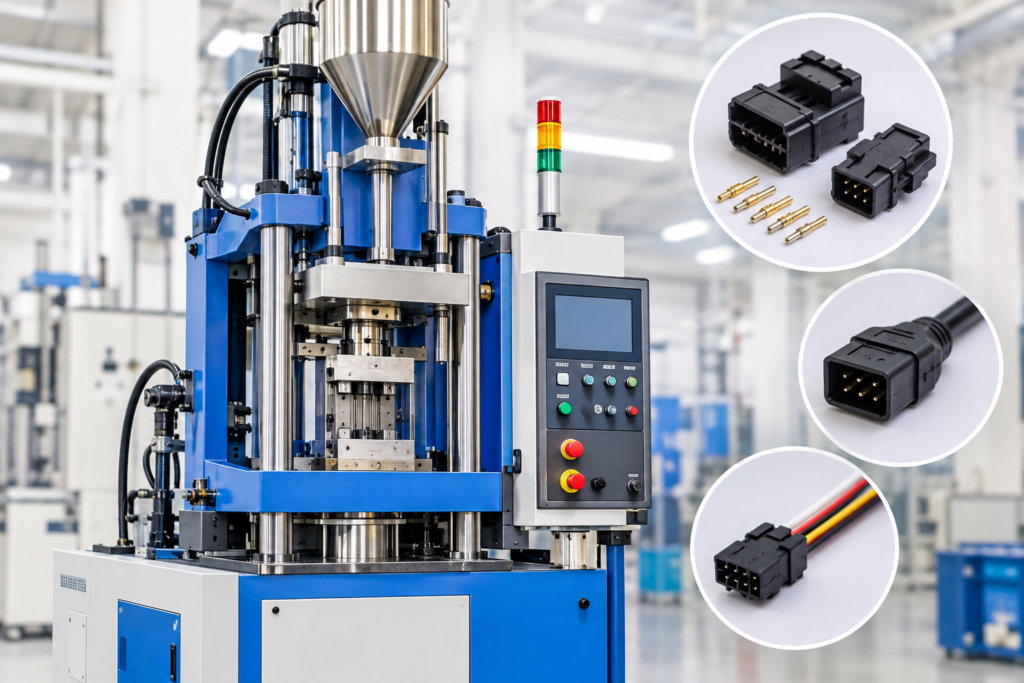
A vertical plastic moulding machine is the best choice for insert moulding electronic connectors, plugs and cable parts because gravity holds the metal inserts still while the plastic flows around them. That one simple advantage means fewer shifted pins, fewer rejected parts and an easier job for your operator.
This guide walks through how the machine works, what to check before buying, and the mistakes to avoid.
What Is a Vertical Plastic Moulding Machine and Why Do Electronics Makers Use It?
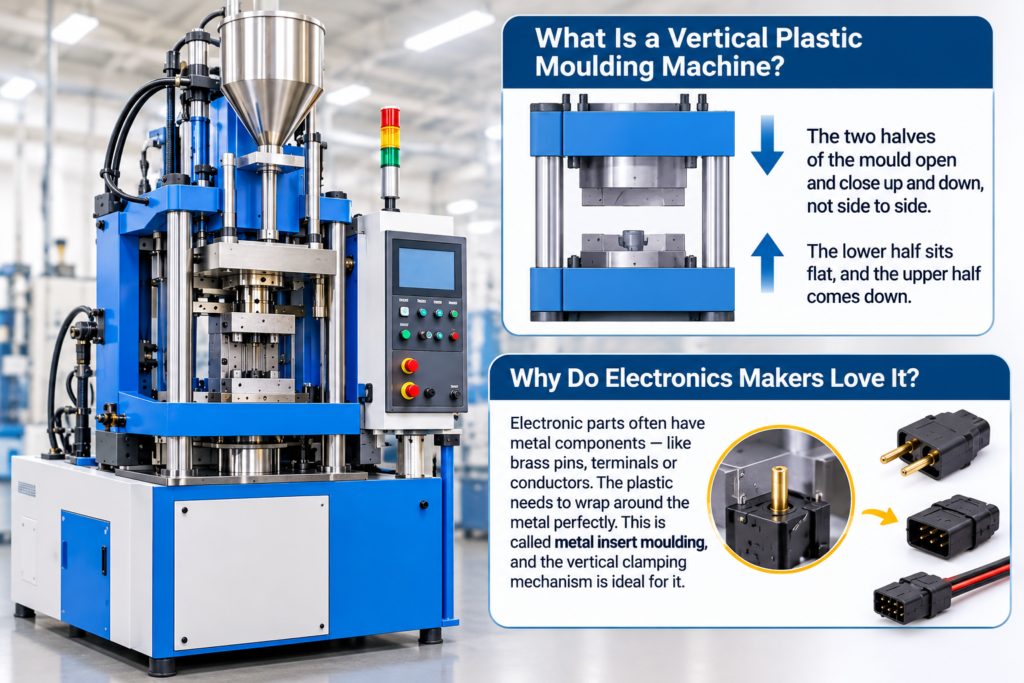
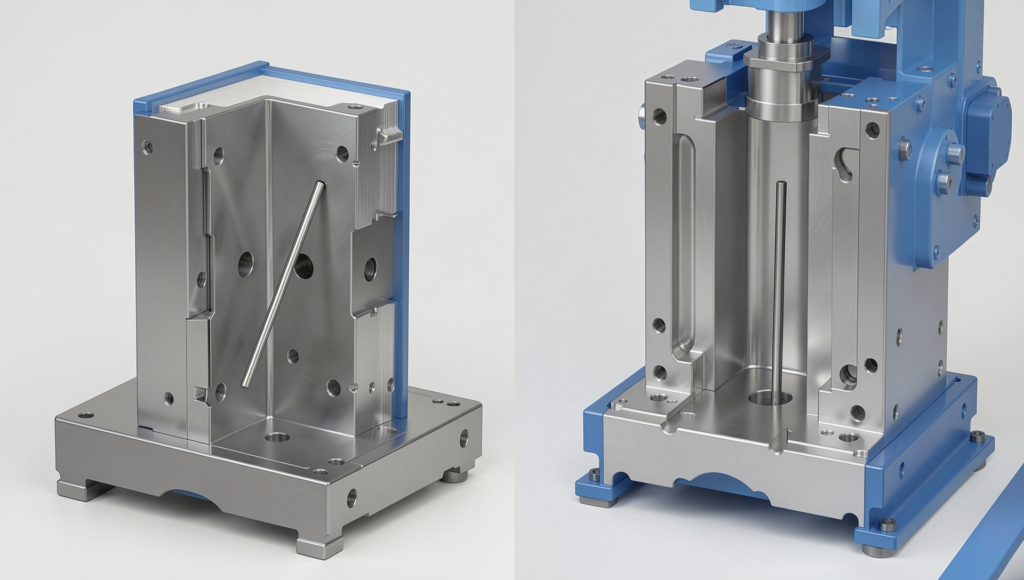
A vertical plastic moulding machine is an injection moulding machine where the two halves of the mould open and close up and down, not side to side. The lower half sits flat like a table. The upper half comes down on top of it. Plastic is then injected, usually at the parting line between the two halves.
So why do electronics makers love it?
Because electronic parts are rarely just plastic. A plug has brass pins. A connector has metal terminals. A cable part has a wire or a conductor running through it. The plastic has to wrap around that metal perfectly. This is called metal insert moulding, and the vertical clamping mechanism is built for it.
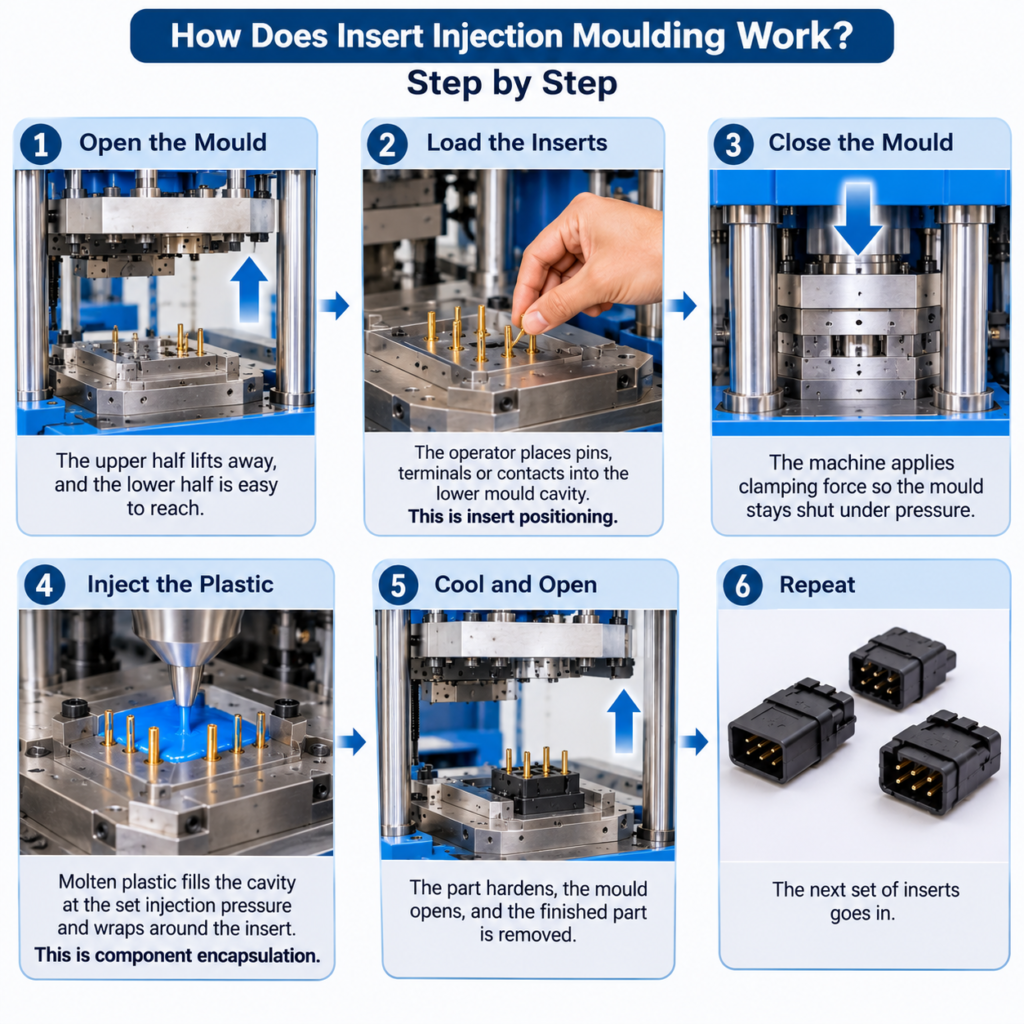
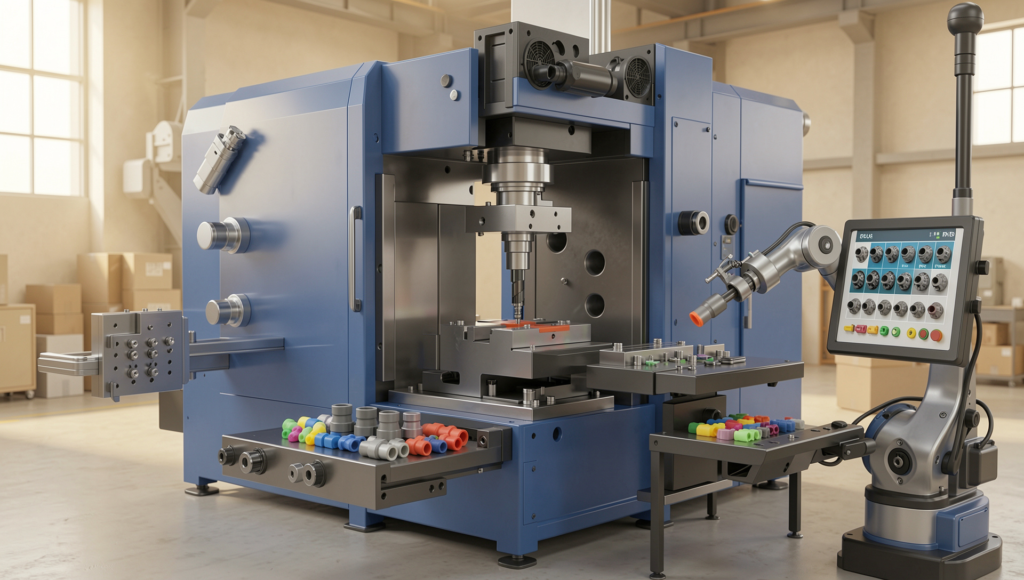
- Open the mould. The upper half lifts away, and the lower half is easy to reach.
- Load the inserts. The operator (or a robot) places pins, terminals or contacts into the lower mould cavity. This is insert positioning.
- Close the mould. The machine applies clamping force so the mould stays shut under pressure.
- Inject the plastic. Molten plastic fills the cavity at the set injection pressure and wraps around the insert. This is component encapsulation.
- Cool and open. The part hardens, the mould opens, and the finished part is removed.
- The next set of inserts goes in.
Which Electronic Parts Can You Make on a Vertical Machine?
Part |
What gets moulded | Why vertical works well |
Electrical connectors | Plastic housing around metal terminals | Terminals stay aligned during the shot (connector insert moulding) |
Plugs | Plastic body around metal pins | Pins must sit straight and at exact spacing |
Cable parts | Strain relief or cable joint around a wire end | Cable end rests flat and supported (overmoulding technology) |
Switch and socket parts | Plastic base around contacts | Many small inserts loaded in one go |
Sensor housings | Plastic around small metal elements | Gentle encapsulation of delicate parts |
Why Do Inserts Move in a Horizontal Machine but Stay Put in a Vertical One?
In a horizontal machine, the mould stands upright like a book on a shelf. A loose pin placed in the cavity can slip, tilt or fall out before the mould closes. Magnets or special holders can help, but they add cost and complexity.
In a vertical plastic injection machine, the lower mould lies flat. The insert simply rests in its pocket. This gives you:
- Better insert positioning, with no extra holding tricks
- Precision insert placement, so pins stay straight and on-center
- Higher molding precision, because the insert does not shift when plastic hits it
- Better repeatability, because every cycle starts from the same flat position
What Should You Check Before Buying a Vertical Plastic Moulding Machine?
- Clamping force. Clamping force must be strong enough to hold the mould shut against injection pressure. If it is too low, plastic leaks out, and you get flash.
- Shot size and injection pressure. Small connectors need small shots. A machine that is too big wastes material and can degrade the plastic.
- Table type. A single-station machine is simple. A shuttle table or rotary table lets the operator load inserts on one side while the other side is moulding.
- Mould size and daylight. Check that your mould fits between the platens and that the opening stroke gives enough room to load inserts and remove parts.
- Material compatibility. Electronics commonly use nylon (PA), PBT, polycarbonate, PVC and TPE. Good material compatibility between the machine, the screw and the resin matters.
- Automated insert loading. For higher volumes, ask whether the machine can work with automated insert loading, such as a robot or feeder.
- Controls and repeatability. Look for a controller that stores settings and repeats them every cycle. Good repeatability means fewer rejects and less waste.
- After-sales support. Spares, service and a supplier who answers the phone matter as much as the machine itself.
Where Can You Find Reliable Injection Moulding Machines in India?
Advance Plastic Machinery has been supplying plastic processing machinery in India since 1993 from its base in Greater Noida. The company deals in new machines (the Kyoto range) and imported Japanese used injection molding machines from brands such as Mitsubishi, Toshiba, JSW, Sumitomo, and Niigata. Its stock covers 170+ injection molding machines from 7 T to 2000 T, and it also supplies auxiliaries including hopper dryers, auto loaders, mold temperature controllers, and grinders.
Conclusion
If your connectors, plugs or cable parts have metal inserts, yes, a vertical plastic moulding machine is very likely the right fit. Gravity keeps inserts steady, the compact build saves floor space, and the easy loading height makes the operator’s job simpler. Pair it with the right clamping force, a good table type, dry material and steady mould temperature, and you get better quality, faster cycles and fewer rejects.
Need Help Choosing the Right Machine for Your Connector or Cable Parts?
Tell us your part size, insert type and daily output, and our team will help you shortlist the right machine and auxiliaries.
Call us to get a quote today.
Frequently Asked Questions
What is a vertical plastic moulding machine used for?
A vertical plastic moulding machine is used mainly for insert moulding and overmoulding. For example, it is used to make electrical connectors, plugs, switches, sensor housings and cable parts.
What is the difference between vertical and horizontal injection moulding machines?
In a vertical machine, the mould opens and closes up and down. The inserts rest flat in the lower mould. On the other hand, in a horizontal machine, the mould opens side to side, and inserts can slip unless they are held in place.
Which plastics are used for electrical connectors and plugs?
Common choices are nylon (PA), PBT, polycarbonate, PVC and TPE. Many of these need proper drying before moulding, so a hopper dryer is a useful addition to the line.
How much clamping force do I need for insert moulding?
The required clamping force for insert moulding depends on the projected area of your part and the material. Always confirm with your mould designer or machine supplier before choosing the machine.
How to reduce cycle time in insert moulding?
If you want to reduce cycle time in insert moulding, use a shuttle table or rotary table so inserts are loaded while the next part is being moulded. For higher volumes, consider automated insert loading with a robot or feeder.