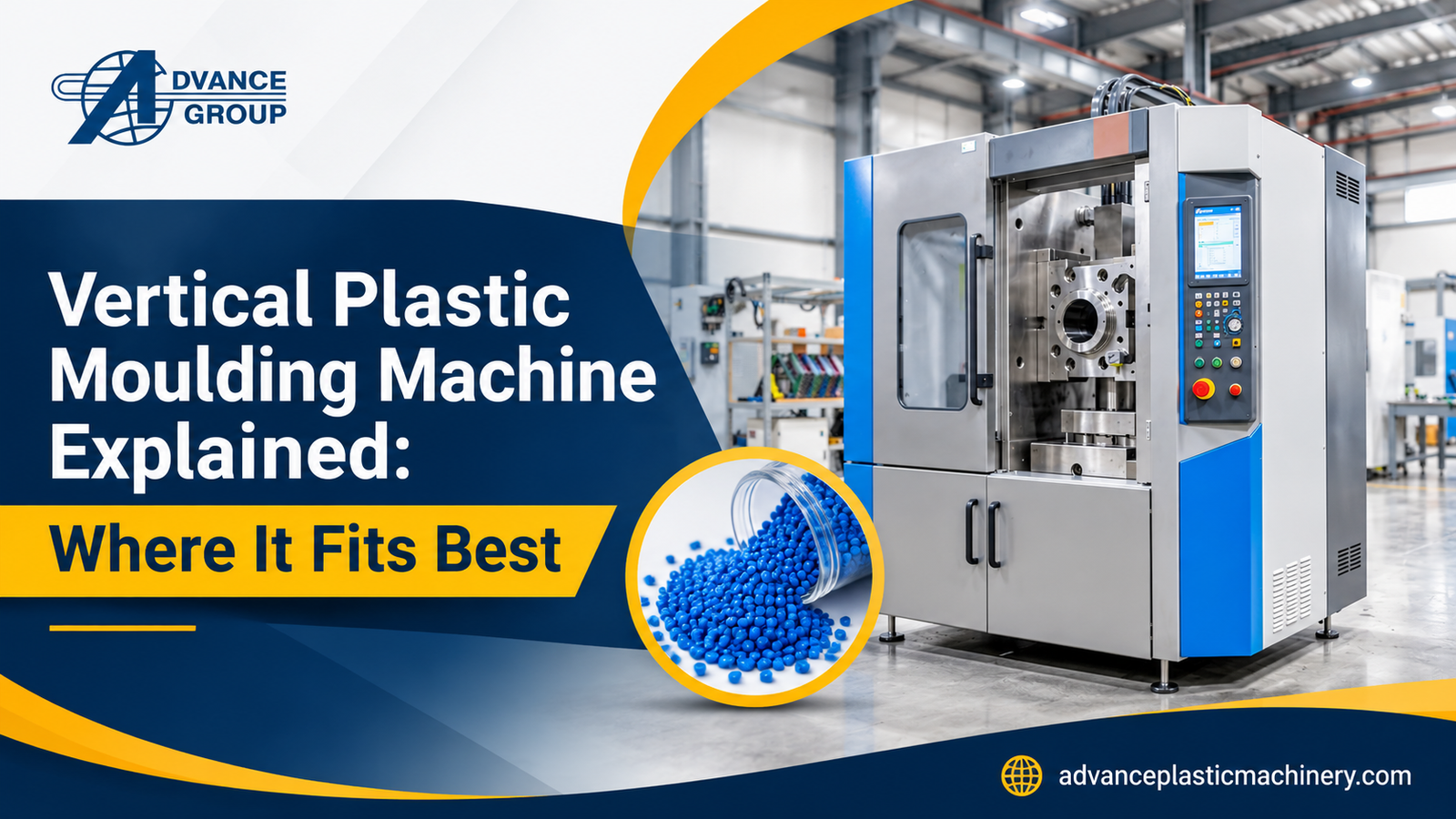
A vertical plastic moulding machine fits best where you need to place metal or other inserts in a mould and mould plastic around them. Typical parts include electrical connectors, switches, sensor housings and small precision plastic molding components. Its upright clamp and compact footprint make loading inserts easy and keep them in place. This is why it is the usual choice for insert molding process work.
What Is a Vertical Plastic Moulding Machine and How Does It Work?
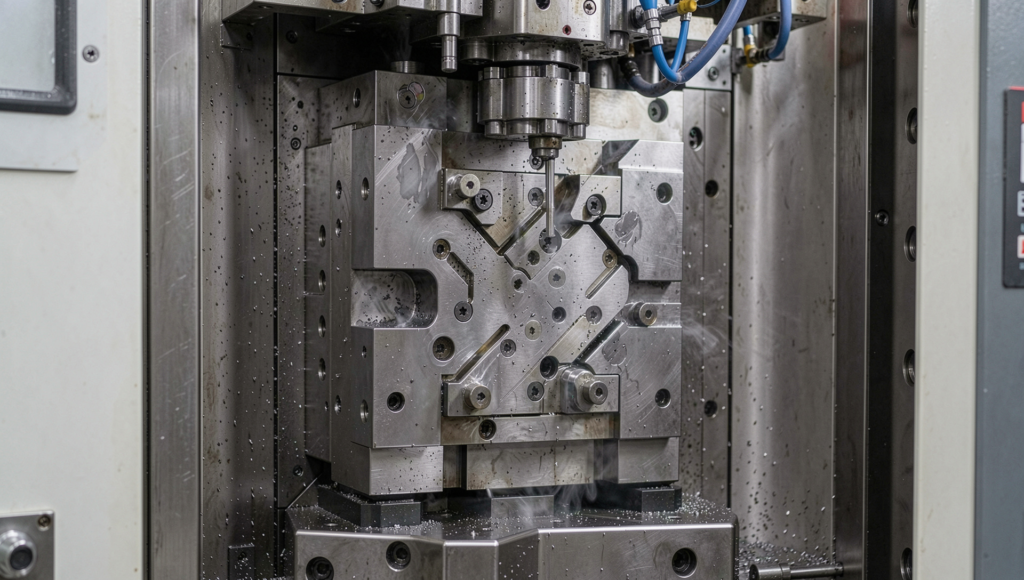
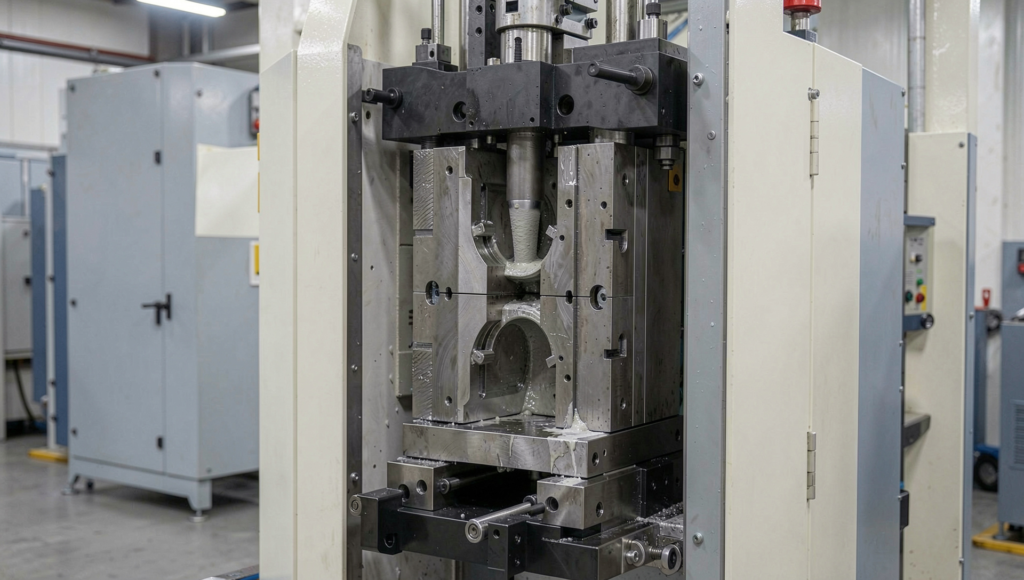
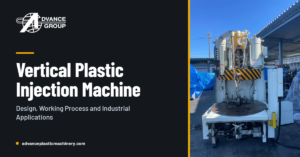
A vertical plastic moulding machine is an injection moulding machine whose clamping unit moves up and down instead of side to side. It sits perfectly flat; half of the mould sits above and half below. This is how a vertical plastic injection molding machine works:
- The operator loads the insert into the lower mould half.
- The mould closes under pressure.
- Molten plastic is injected into the cavity and flows around the insert.
- The part cools, the mould opens, and the finished piece comes out.
The key difference is the position of the mould. Because it lies flat, inserts stay put without clips or extra holders. This helps plastic component manufacturing where accuracy matters.
Application | Why a vertical machine suits it |
Electrical connector manufacturing | Metal pins sit in the mould and plastic is moulded around them |
Automotive plastic components | Sensor housings, clips and small parts with metal inserts |
Metal insert encapsulation | Screws, bushes, terminals and wires are sealed inside plastic |
Overmolding applications | A plastic or rubber layer is added over a base part, such as tool handles |
Switches, plugs and sockets | Fast loading, repeatable positioning |
Small electronic parts | Compact size, steady quality |
Why Is a Vertical Molding Machine Used for Insert Moulding?
An insert moulding machine needs three things: easy loading, stable inserts and tight control. A vertical machine offers all three.
- Gravity helps. The insert rests on the mould and does not slide.
- Loading is easy. Operators can reach the open mould at a comfortable height.
- Space is saved. It is compact injection molding equipment, so it suits small workshops and crowded floors.
- Two-station tables. Many vertical machines use a shuttle or rotary table. One mould is loaded while the other is being injected, which saves time.
What Is the Insert Molding Process, Step by Step?
The insert molding process joins metal and plastic in one moulding cycle. It replaces later assembly steps like gluing or screwing.
- Prepare the insert. Clean it, and add knurling or grooves so plastic grips it.
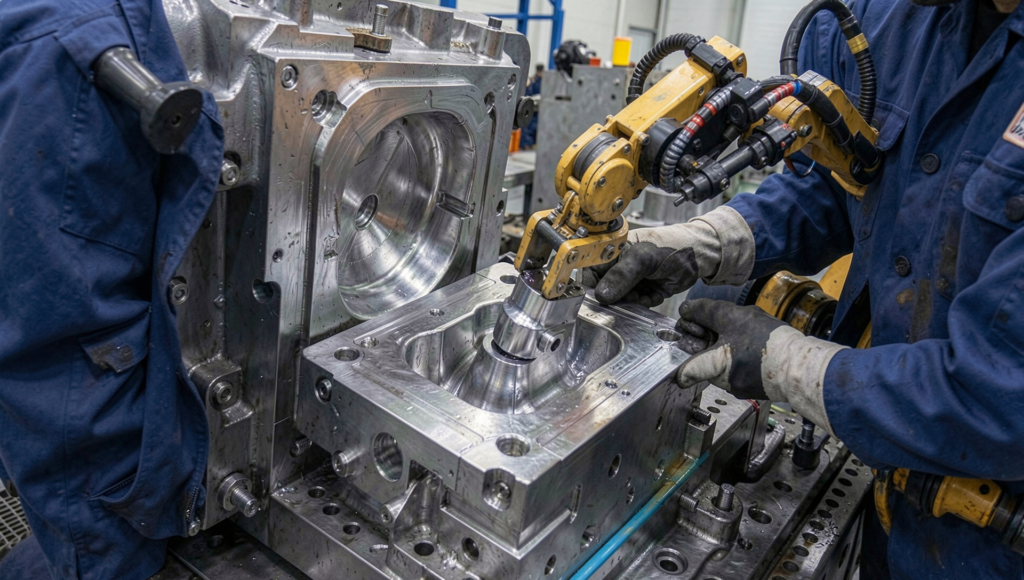
- Place it in the mould. Load by hand or with a robot.
- Close the mould. The injection molding machine clamping unit holds both halves shut against injection pressure.
- Inject the plastic. Molten plastic fills the cavity and wraps the insert.
- Cool and eject. The part hardens and is removed.
- Check insert position and bond strength.
Vertical vs Horizontal Moulding Machine: Which One Is Better?
Factor | Vertical machine | Horizontal machine |
Insert moulding | Excellent | Good, but inserts may need holding |
Part size | Small to mid-size | Small to very large |
Floor space | Less | More |
Automation | Moderate | High |
Best use | Inserts and overmoulding | General high-volume moulding |
How Do You Choose the Right Vertical Plastic Injection Molding Machine?
Use this checklist before buying:
- Clamping force: Match it to your part size and plastic type.
- Shot size: Make sure the machine can inject enough material for your part.
- Table type: Choose a single, shuttle or rotary table based on your output target.
- Mould size: Check the platen size and daylight (the opening gap).
- Control system: Look for stable, repeatable settings.
Condition and support: For used machines, ask about service history and after-sales help.
Where Can You Find Reliable Injection Moulding Machines in India?
If you are planning to buy or compare machines, Advance Plastic Machinery is a good place to start. It stocks 170+ injection moulding machines from 7T to 2000T, including imported Japanese brands such as Mitsubishi, Toshiba, JSW, Sumitomo and Niigata, along with auxiliaries like hopper dryers and grinders. You can explore its new machines, used machine stock or contact the team to ask about current options for your part.
Conclusion
A vertical plastic moulding machine is suitable where metal and plastic must be joined in one step, with small to mid-size parts. The requirement for accurate insert placement makes it work well for connectors, automotive plastic components and overmoulded products.
Looking for a Vertical Plastic Moulding Machine? Get the Right Fit Today.
Share your part details with the team at Advance Plastic Machinery, and we will suggest suitable options.
Frequently Asked Questions
What is a vertical plastic moulding machine used for?
It is mainly used for insert the molten plastic granules into a mold and. Common products include electrical connectors, switches, sensor housings and small automotive parts.
Why is a vertical machine better for insert moulding?
Gravity keeps the insert in place in the lower mould half. This reduces insert movement and makes loading easier.
Do vertical moulding machines take less space?
Yes. They have a smaller floor footprint, though they need more ceiling height.
Can a vertical machine do overmoulding?
Yes. It can mould a second layer of plastic or rubber over a base part, such as a handle or a grip.
Can I buy a used vertical injection moulding machine?
Yes, you may buy. But, you should check the machine’s condition, service history, clamping force and after-sales support before you decide.