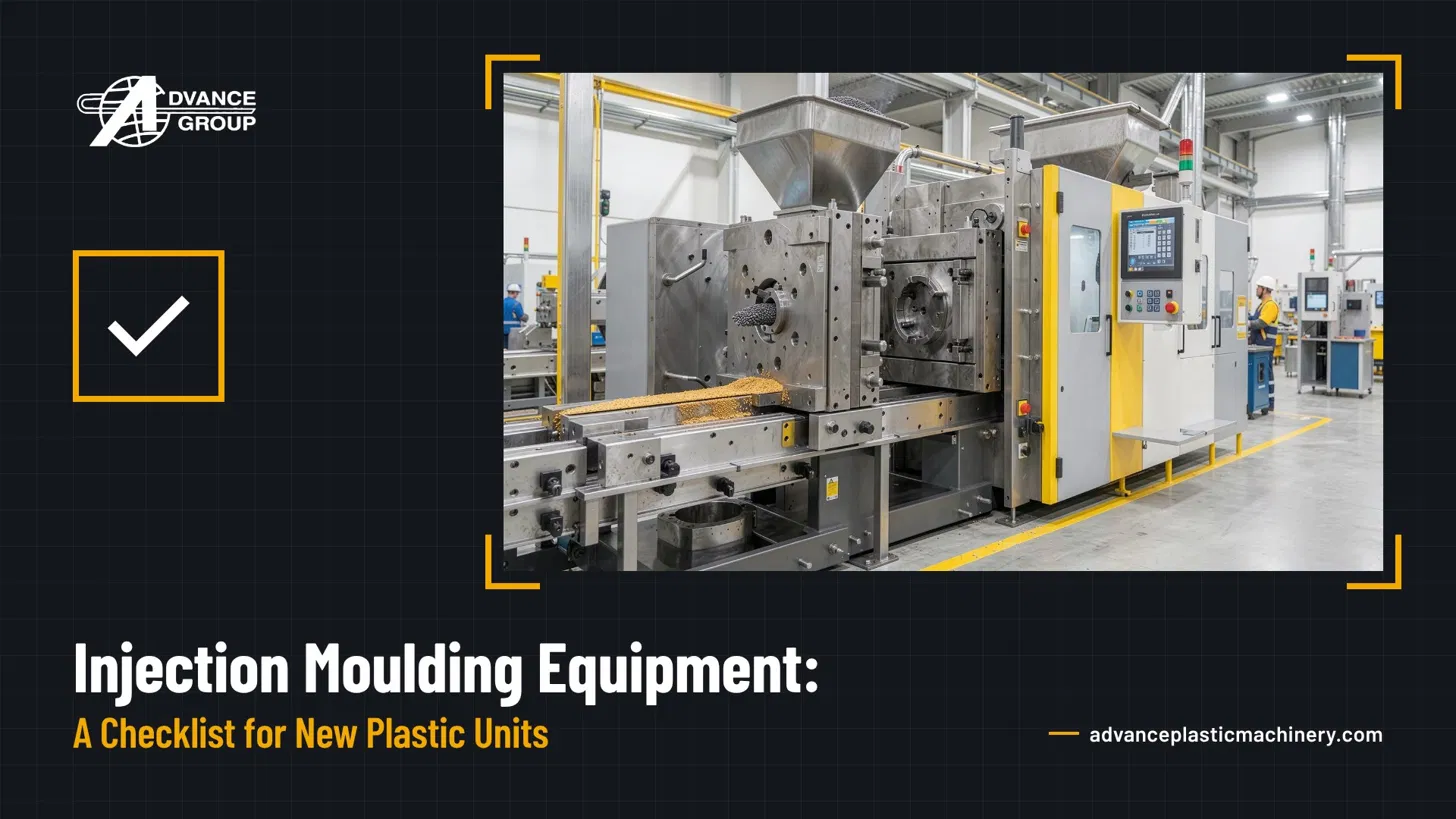
Injection Molding Equipment: A Checklist for New Plastic Units

Injection Molding Equipment

Injection molding equipment for a new plastic unit includes the injection moulding machine, moulds (tooling), a hopper dryer, auto loader, mould temperature controller, chiller or cooling tower, crusher or grinder, and utilities such as three-phase power, compressed air and cooling water. Get these right in the right order, and your plant starts on a stable footing. Get them wrong, and you pay for it in scrap, downtime and idle capital.

This guide works as a tick-box checklist – from the actual plastic equipment for new plastic units and sizing to what to buy first.

What Injection Molding Equipment Does a New Plastic Unit Need?

Stage

Equipment

Why it matters 

Core

Injection moulding machine, moulds

Produces the part

Material handling

Hopper dryer, auto loader, blender

Keeps resin dry and consistent

Thermal control

Mould temperature controller, chiller, cooling tower

Controls cycle time and part quality

Recycling

Crusher/grinder 

Reuses sprues, runners and regrind 

Utilities 

Power, compressed air, water circuit, crane

Keeps the plant running

Quality and safety 

Weighing scale, gauges, guards, fire safety

Protects people and output

What Equipment Is Used in Injection Moulding?

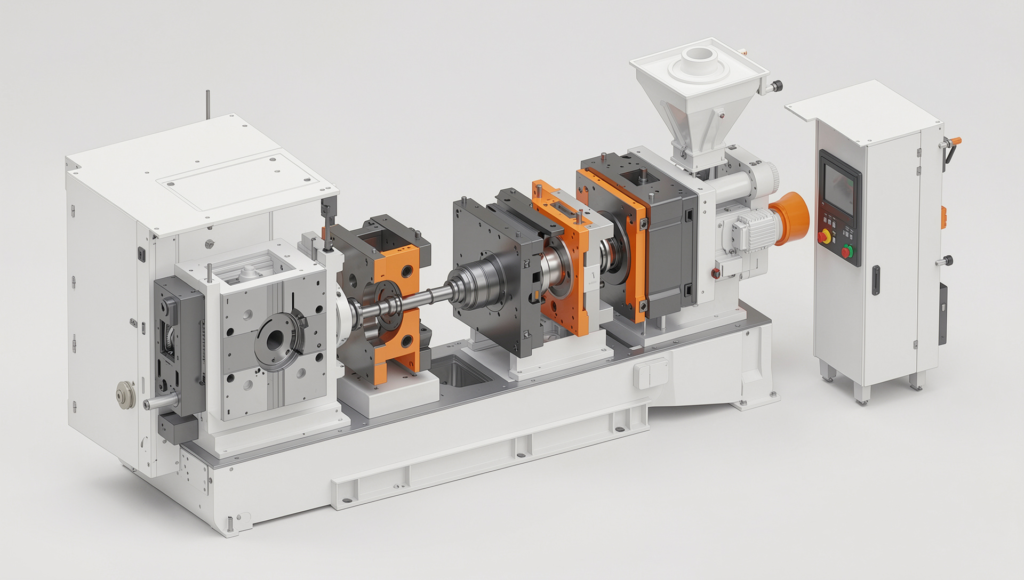
An injection moulding line has one centre and several supporting systems. The centre is the machine itself. A standard machine has three parts:

  • Clamping unit: holds the mould shut under pressure, using platens and tie bars.
  • Injection unit: melts the plastic pellets in a heated barrel and pushes them into the mould.
  • Control system: manages pressure, temperature, speed and timing.


Checklist: core equipment

  • Injection moulding machine sized to your product
  • Mould (tool) designed for your part, with cooling channels
  • Spare screw, barrel and nozzle wear parts
  • Mould handling trolley or crane
Injection Molding Equipment

How Do You Choose the Right Injection Moulding Machine Size?

Machine size is expressed in tonnes of clamping force. Too little force makes the mould flash open. Too much wastes money and energy.

A common rule of thumb is to multiply the projected area of all cavities plus runners by roughly 2 to 5 tons per square inch, depending on the resin. 

Check shot size as well. The shot weight should sit comfortably inside the machine’s shot capacity, commonly between about 20% and 80%.

Drive type

Strength

Trade-off 

Hydraulic 

Strong clamping, lower upfront cost

Higher energy use

Hybrid servo

Lower energy use than conventional hydraulic

Costs more than basic hydraulic 

All-electric

Precision, clean operation, efficiency

Highest upfront cost 

Checklist: sizing

  • Projected area and tonnage calculated
  • Shot weight checked against capacity
  • Mould dimensions fit between tie bars
  • Drive type chosen for your power cost and precision needs
Injection Molding Equipment

Which Auxiliary Equipment Does a New Plastic Unit Really Need?

Auxiliary equipment keeps the machine productive. Skipping it is the most common way new units lose margin.

Material handling

  • Hopper dryer: essential for hygroscopic resins such as nylon, PET and polycarbonate, which absorb moisture and form defects like splay if moulded wet.
  • Auto loader: feeds material without manual lifting and reduces contamination.
  • Material blender/mixer: blends masterbatch (colour) and virgin material evenly.

Thermal control

  • Mould temperature controller: holds the tool at a steady temperature for consistent surface finish and dimensions.
  • Chiller or cooling tower: removes heat from the mould and hydraulic oil. Cooling takes up a large share of the cycle, so this directly affects output.


Recycling and handling

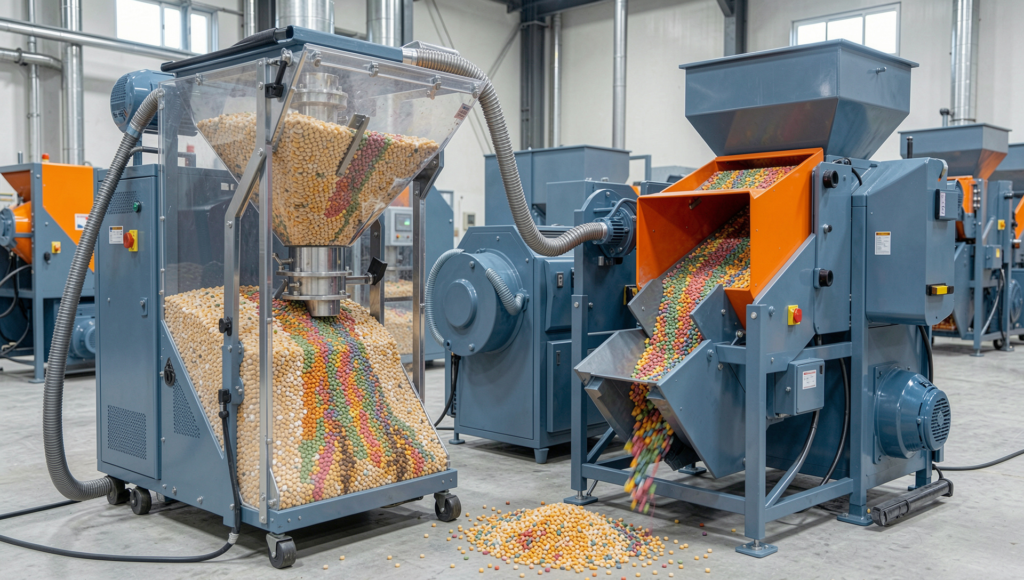
  • Crusher/grinder: converts sprues and rejected parts into regrind.
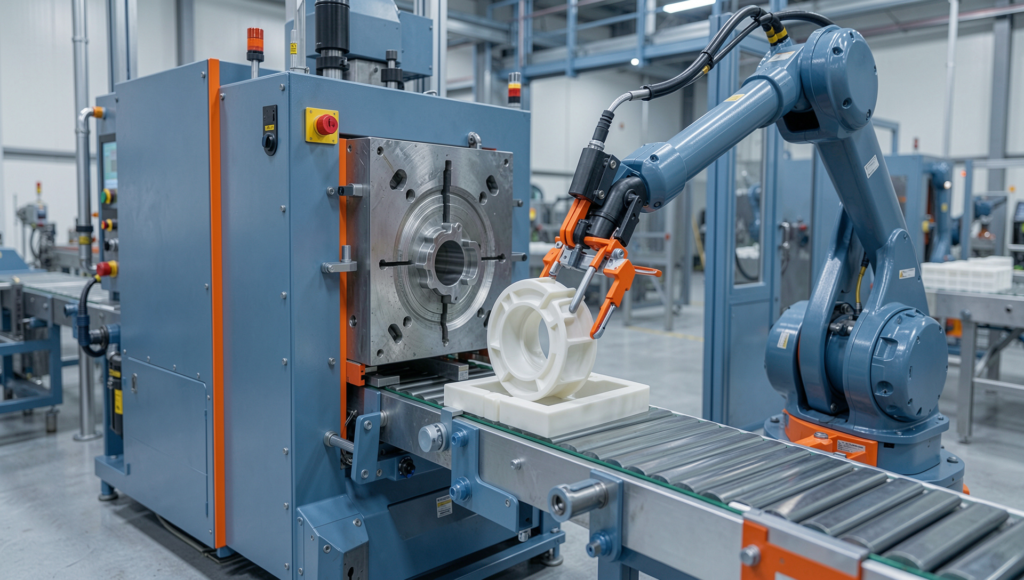
  • Take-out robot or conveyor: optional at the start, valuable as volumes grow.

What Utilities and Infrastructure Does an Injection Moulding Plant Need?

Utilities decide whether your equipment performs as advertised.

  • Power: confirm sanctioned load, three-phase supply, a voltage stabiliser or transformer, and backup for critical loads.
  • Cooling water circuit: piping, pumps, a tower or chiller, and clean water.
  • Compressed air: an air compressor with a dryer for ejection and pneumatic equipment.
  • Foundation and floor: a levelled, load-rated floor.
  • Overhead crane (EOT) or hoist: needed for heavy mould changes.
  • Layout: space for maintenance access, material storage and finished goods.
Injection Molding Equipment

Where Can You Source Injection Molding Equipment in India?

If you are building a plant, you can buy the machine and auxiliaries from one supplier. Advance Plastic Machinery has been operating since 1993 from Greater Noida, Uttar Pradesh. It stocks 170+ injection moulding machines from 7 T to 2000 T and is known as a large stockist of imported Japanese used machines. Brands include Mitsubishi, Toshiba, JSW, Sumitomo, Niigata, Nissei and Engel.

Here is where to look, by need:

  • Used machines for lower capital cost and quick delivery
  • New machines for the latest controls
  • Auxiliaries, including hopper dryers, crushers and grinders, auto loaders and mould temperature controllers

Conclusion

A new plastic unit succeeds when its equipment is matched, sequenced and supported. Start with the machine and mould, add drying and cooling, plan your utilities, and build quality and safety in from day one. 


Ready to plan your line? Contact the team with your product, expected volumes and budget.

Frequently Asked Questions

What Injection molding equipment is needed for a plastic unit?

An injection moulding machine, a mould, a material dryer, a mould temperature controller, a chiller or cooling tower, and a crusher or grinder are the necessary items. 

The main parts are the clamping unit, the injection unit and the control system. The clamping unit holds the mould shut. The injection unit melts and injects the plastic.

Most new plastic units begin with one or two machines that fit their first product, then add capacity once orders are steady. 

Hydraulic machines use a conventional pump and cost less upfront. Hybrid servo machines use a servo-driven pump to cut energy use. 

A cooling tower is useful where water can be cooled to near ambient temperature. A chiller is needed when the mould requires colder or more tightly controlled water. 

Share:

Facebook
Twitter
LinkedIn
WhatsApp

Popular Posts